
The shift toward sustainable living is no longer a niche trend—it’s a mainstream movement. In 2026, more people than ever are actively seeking ways to cut plastic waste, reduce their carbon footprint, and simplify their routines with products that align with zero-waste principles. Ready-to-use zero-waste products kits have become one of the smartest ways to meet that demand. Instead of forcing customers to hunt down individual items, these kits deliver a complete, curated solution in one package.
I built and sold zero-waste kits for years, both online and at local markets, before eventually selling the brand. What started as a side project packing bamboo toothbrushes and beeswax wraps in my kitchen turned into a profitable business that supported me full-time. The biggest lesson? People don’t just want zero-waste products—they want convenience, clarity, and confidence that they’re making a real difference. Kits deliver exactly that.
This guide walks you through everything I learned: what makes zero-waste product kits sell, how to create them profitably, where to source materials, how to price and market them, and how to scale without losing the values that attracted customers in the first place. Whether you’re exploring zero-waste business ideas 2026 or looking for practical steps on creating zero-waste kits, you’ll find actionable advice grounded in real experience—not theory.
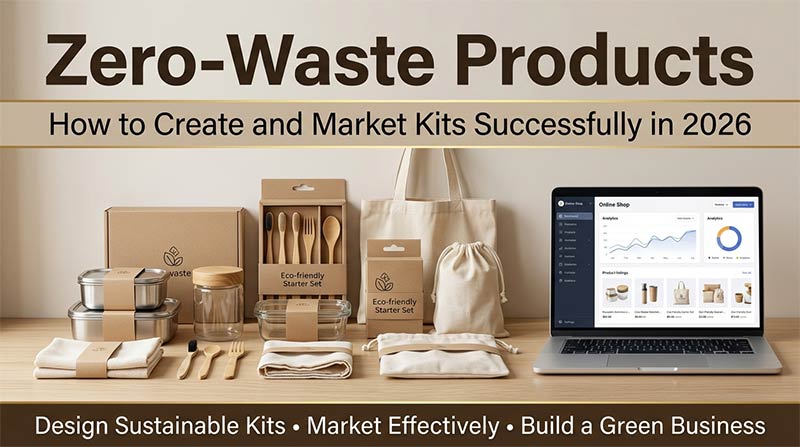
What Zero-Waste Product Kits Are and Why They Sell Well
A zero-waste product kit is a thoughtfully assembled collection of reusable, plastic-free, or low-waste items designed around a specific need or lifestyle. Think of it as a starter system rather than a random assortment of products. Customers receive everything they need to replace disposable items in one go—bathroom essentials, kitchen tools, cleaning supplies, or travel gear—along with clear instructions on how to use and maintain them.
These kits sell well for several practical reasons. First, they remove decision fatigue. Many people feel overwhelmed by the sheer volume of “eco-friendly” options online. A well-designed kit answers the question “Where do I even start?” Second, they create higher average order values. Selling a single beeswax wrap might bring in $12; selling a kitchen starter kit that includes wraps, produce bags, and a dish brush can easily hit $45–$65. Third, kits encourage habit formation. When customers receive a complete system, they’re more likely to stick with the zero-waste lifestyle and become repeat buyers or brand advocates.
In my experience, kits also photograph beautifully and perform strongly on social platforms. A single product shot of a bamboo toothbrush rarely stops the scroll. A flat-lay of an entire bathroom kit arranged with linen pouches and dried flowers does. That visual appeal translates directly into higher conversion rates on Etsy, Instagram, and independent websites.
The market continues to grow because regulations around single-use plastics keep tightening, and younger consumers increasingly vote with their wallets for brands that prioritize transparency and longevity. Zero-waste product kits sit at the intersection of convenience, ethics, and aesthetics—three things modern buyers refuse to compromise on.
Popular Zero-Waste Kit Ideas That Consistently Perform
Not every kit idea is equally profitable. After testing dozens of combinations, I found that the strongest performers solve a clear daily pain point and replace items people already buy regularly.
Starter Kits remain the top entry point. These usually include a mix of high-impact swaps: a bamboo toothbrush, toothpaste tablets or powder, a reusable cotton produce bag, a beeswax food wrap, and a simple stainless-steel straw set. They’re ideal for gift-giving and for customers who want to “try zero waste” without a big commitment.
Bathroom Kits sell year-round. Core items often include a safety razor or bamboo toothbrush, solid shampoo and conditioner bars, a reusable cotton round set, a glass or metal deodorant container, and a small linen bag for storage. Adding a bamboo tongue scraper or silk dental floss can push the perceived value higher.
Kitchen Kits tend to generate the highest margins. Popular contents include beeswax wraps in multiple sizes, organic cotton produce bags, a natural dish brush with replaceable head, a silicone or stainless-steel sponge alternative, and reusable silicone lids or bowl covers. Kitchen kits appeal to both individuals and households, making them strong wholesale candidates for eco stores and cafes.
Travel Kits perform especially well during holiday seasons and summer. Compact items such as a collapsible silicone cup, bamboo cutlery set, solid toiletries, a reusable water bottle, and a small mesh laundry bag fit easily into a carry-on. These kits solve the problem of airport security restrictions and single-use hotel amenities.
Cleaning Kits attract a more practical, value-driven audience. Concentrated cleaning tablets or powders, reusable spray bottles, microfiber or bamboo cloths, and a natural scrub brush form a solid foundation. Customers appreciate the ability to refill rather than repurchase plastic bottles.
Other strong variations include period kits (with reusable pads or a menstrual cup plus cleaning supplies), pet kits (bamboo brushes, natural shampoo bars, reusable waste bags), and office kits (bamboo pens, reusable notebooks, and desk organizers made from recycled materials). The key is to keep the theme tight. A kit that tries to cover bathroom, kitchen, and travel usually feels unfocused and sells poorly.
Sourcing Eco-Friendly Materials and Packaging
Sourcing is where many new makers lose money or compromise their values. In the early days I ordered from the cheapest suppliers I could find, only to discover that some “bamboo” products were coated in plastic or shipped in excessive packaging. That experience forced me to build a stricter supplier checklist.
Look for materials that are genuinely plastic-free, compostable, or designed for long-term reuse. Bamboo, organic cotton, stainless steel, glass, beeswax, and plant-based bioplastics (used sparingly) form the backbone of most successful kits. For packaging, prioritize kraft paper boxes, compostable mailers, recycled cardboard inserts, and fabric drawstring bags that customers can reuse.
Reliable starting points include platforms that specialize in bulk eco goods and verified suppliers who provide material certifications. I regularly checked suppliers through directories focused on sustainable manufacturing and requested samples before placing larger orders. Building relationships with a few trusted vendors proved far more valuable than constantly chasing the lowest price.
A practical tip: order samples of every component and test them yourself for at least two weeks. A beautiful bamboo toothbrush that loses bristles after ten uses will generate refunds and damage your reputation faster than any marketing campaign can repair.
For packaging inspiration and current standards, resources such as the Ellen MacArthur Foundation offer useful frameworks on circular design, while supplier directories like Package Free Shop’s wholesale section or similar zero-waste wholesale platforms can help you locate smaller-batch options.
Designing and Assembling Kits for Maximum Appeal and Profit
Design is not just about aesthetics—it’s about perceived value and unboxing experience. Customers who feel delighted when they open the box are far more likely to leave reviews, post on social media, and reorder.
Start with a clear hero item. In a bathroom kit, that might be a high-quality safety razor or a set of solid shampoo bars in attractive tins. Arrange the remaining items so the eye moves naturally across the contents. Use natural textures—linen, kraft paper, wood—to reinforce the zero-waste message. Include a simple printed card explaining each item’s purpose and care instructions. Many customers told me this card was the reason they felt confident using the products.
Assembly should be efficient. I created a simple packing station with labeled bins for each component and a checklist for every kit type. Consistency matters: customers notice when one kit arrives with a different brand of toothpaste tablets than the last. Over time I standardized components across kits wherever possible to simplify inventory.
Profitability improves when you design for both retail and wholesale. Keep the retail version premium with nicer packaging and a small freebie (a sample soap or sticker). Create a slightly leaner wholesale version that still looks professional but allows retailers a healthy margin.
Pricing Strategies and Realistic Profit Margins
Pricing is where idealism meets reality. Many new sellers underprice because they want their products to be accessible. That approach usually leads to burnout.
A workable formula I used:
- Calculate the true cost of goods (materials + packaging + labor for assembly).
- Add a target gross margin of 55–65% for direct-to-consumer sales.
- For wholesale, aim for 40–50% margin after the retailer’s cut.
Here is a simplified example of a mid-range kitchen starter kit based on typical 2026 bulk pricing (costs will vary by supplier and volume):
| Item | Approx. Cost | Retail Value Contribution |
|---|---|---|
| Beeswax wraps (set of 3) | $4.20 | $14–16 |
| Organic cotton produce bags (3) | $2.80 | $9–11 |
| Natural dish brush | $1.90 | $6–8 |
| Silicone sponge alternative | $1.50 | $5–7 |
| Kraft box + tissue + card | $1.40 | — |
| Total cost | $11.80 | |
| Suggested retail price | $42–48 | |
| Gross margin (at $45) | ~74% before shipping & fees |
After platform fees, shipping, and returns, a realistic net margin on direct sales often lands between 30–45% once the business is running smoothly. Wholesale margins are tighter but provide more predictable volume.
Test price points. I raised the price of my best-selling bathroom kit by 15% after six months and saw almost no drop in conversion rate—only higher profit per order. Customers who care about quality and values are often less price-sensitive than we assume.
Marketing Channels That Actually Work for Zero-Waste Kits
You do not need to be everywhere. Focus on channels where your ideal customers already spend time.
Etsy remains one of the strongest platforms for how to sell zero waste kits when you’re starting. The built-in traffic from people searching “zero waste starter kit” or “plastic free bathroom set” is hard to replicate elsewhere. Optimize listings with clear photos, detailed descriptions, and keywords such as “zero-waste products kits” and “zero waste product kits.”
Your own website gives you higher margins and full customer data. Tools that integrate inventory, email, and simple checkout make this accessible even for solo founders. Many of my highest-lifetime-value customers came through the site after discovering me on social media or Etsy.
Social media, especially Instagram and TikTok, works best when you show the products in use rather than just pretty flat-lays. Short videos demonstrating a kitchen kit replacing plastic wrap, or a travel kit packing into a small pouch, consistently outperformed static images. Focus on education over hard selling.
Wholesale can stabilize cash flow. Approach independent eco stores, zero-waste shops, cafes, and co-ops. Offer a simple line sheet, clear minimums, and reliable restocking. I found that retailers appreciated kits because they required less staff training than individual loose products.
Cross-promote with complementary brands. Collaborations with makers of natural soaps, reusable bags, or sustainable fashion often brought in warm audiences who already cared about the values.
For more ideas on building product-based businesses, you may find these related guides useful: side hustle ideas that actually scale and how to start an eco-friendly product business.
Building a Brand Around Sustainability and Educating Customers
Your brand is more than a logo. It is the reason someone chooses your kit over a cheaper alternative on Amazon. Transparency builds trust. Share where materials come from, how packaging is chosen, and what happens at the end of a product’s life. Customers respect honesty about imperfections more than polished greenwashing.
Education is your most powerful marketing tool. Blog posts, email sequences, and social content that teach people how to use and care for the products increase satisfaction and reduce returns. I created a simple “Zero-Waste Starter Guide” PDF that went out with every order. Many customers later told me it was the reason they became long-term fans.
Stay consistent with your values even when it costs more. Switching to a cheaper but less sustainable packaging option once might save money in the short term, but it erodes the brand equity that justifies premium pricing.
Scaling the Business and Common Challenges
Scaling a zero-waste kit business brings new problems. Inventory management becomes critical—running out of one component can halt entire kit production. Cash flow can tighten when you need to order larger quantities for better pricing. Quality control requires more systems once you’re no longer packing every box yourself.
Common challenges I faced included:
- Seasonal demand swings (holiday spikes followed by quiet Januarys)
- Rising material costs
- Platform algorithm changes affecting visibility
- The emotional weight of trying to “do good” while also running a profitable business
The solutions that worked were practical: maintain a rolling 90-day inventory forecast, diversify sales channels so you’re not dependent on one platform, and build a small team or reliable freelancers for packing during peak periods. Most importantly, protect your own energy. Burnout helps no one—not you, not your customers, and not the planet.
For deeper reading on sustainable packaging standards, the Sustainable Packaging Coalition offers useful resources. For material sourcing inspiration, many makers also reference directories and guides from established zero-waste retailers.
Getting Started: Your Next Steps
Creating and selling zero-waste products kits is one of the more accessible and meaningful zero-waste business ideas 2026 available to makers and entrepreneurs. The demand is real, the products solve genuine problems, and the business model rewards both creativity and operational discipline.
Start small. Choose one kit type that solves a problem you personally care about. Source samples, assemble a handful of units, photograph them well, and list them on one platform. Talk to the first ten customers. Listen more than you sell. Iterate based on what they actually use and value.
The path is not always smooth. There will be supply delays, slow sales months, and moments when the numbers feel tight. But there will also be messages from customers who tell you your kit helped them finally stop using plastic wrap, or that it made the perfect gift for someone starting their zero-waste journey. Those moments make the work worthwhile.
If you’re ready to explore more practical business and side hustle strategies, visit makecash.top for additional guides on product-based businesses, eco entrepreneurship, and building sustainable income streams. Your first kit is waiting to be packed.

Disclaimer: This is for educational purposes only and not personalized financial advice. Past performance doesn’t guarantee future results. Always do your own research or seek professional guidance.