
The digital product economy has exploded over the last few years. Whether you are selling minimalist Notion templates, high-converting Lightroom presets, printable wall art, Canva design templates, or algorithmic trading scripts, selling digital downloads has become one of the most lucrative online business models. With zero inventory costs, automated fulfillment, and infinite scalability, it is no wonder creators are flocking to digital storefronts.
However, when you are ready to launch, you inevitably hit the same crossroads every digital entrepreneur faces: Shopify or Etsy for digital products?
Having spent years building, scaling, and occasionally troubleshooting shops on both ecosystems, I’ve experienced firsthand the unique friction points and windfalls of each platform. The short answer? There is no universal “best” platform. The right choice for you depends entirely on your budget, marketing skills, technical patience, and long-term business goals.
In this comprehensive guide, we will break down everything you need to know about Shopify vs Etsy for selling digital downloads in 2026, comparing fees, traffic generation, branding control, scalability, and practical workflows so you can make the right investment for your brand.
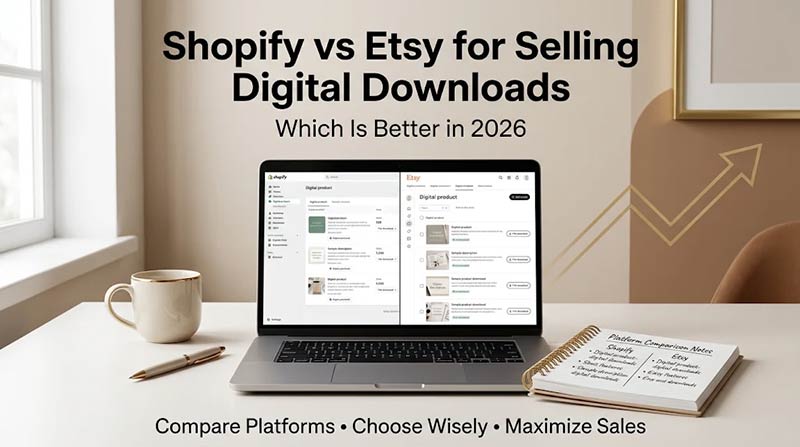
Quick Overview: Etsy vs. Shopify for Digital Products
Before diving into the granular details, let’s establish a high-level understanding of what each platform is built for.
- Etsy is a massive, pre-existing global marketplace with hundreds of millions of active buyers searching with intent to purchase handmade, vintage, and digital goods. When you open an Etsy shop, you are renting retail space inside a bustling digital shopping mall.
- Shopify is an independent e-commerce operating system. It provides the blank canvas, tools, and infrastructure to build your own standalone online storefront. When you use Shopify, you are building your own digital real estate from scratch.
To explore how other creators structure their digital storefronts alongside traditional businesses, check out this comprehensive Etsy shop setup guide and our deep dive into the advanced digital products blueprint.
Key Comparison Factors: How They Stack Up
When evaluating the best platform for digital downloads 2026, you need to weigh several critical operational factors. Let’s analyze how Etsy and Shopify compare across the board.
1. Fees and Cost Structure
- Etsy: Low startup cost, but higher per-transaction fees. Etsy charges a $0.20 listing fee per item (renewed every 4 months or upon sale), a 6.5% transaction fee on the total order amount (including shipping), and standard payment processing fees (typically 3% + $0.25). If you use Etsy Ads, your marketing costs come out on top.
- Shopify: Higher fixed overhead, but lower percentage cuts on high volume. Shopify requires a monthly subscription fee (ranging from basic tiers to advanced plans). In exchange, transaction fees drop significantly, especially if you use Shopify Payments. However, you may need to pay for third-party apps (like digital download delivery apps, email marketing tools, or bundle plugins) which add to your fixed monthly overhead.
2. Traffic Generation & Customer Acquisition
- Etsy: Built-in traffic is Etsy’s superpower. Millions of buyers visit daily, typing keywords into Etsy Search. If your SEO is dialed in, you can make sales on day one without spending a dime on ads or social media.
- Shopify: Zero built-in traffic. Shopify is a ghost town when you first launch. Every single visitor must be earned through sweat equity—organic SEO, TikTok/Reels content, YouTube marketing, paid advertising (Meta/Google Ads), or email funnels.
3. Branding, Customization, and Storefront Control
- Etsy: Highly restricted. Your shop looks like every other Etsy shop. You have a banner, a profile picture, and organized sections, but you cannot customize code, build complex sales funnels, or create sophisticated post-purchase upsell pages. Furthermore, Etsy owns the customer relationship—you do not get the customer’s email address for your CRM.
- Shopify: Total creative freedom. You control every pixel, color, font, and layout. You can install custom themes, embed video sales letters, design seamless multi-step checkout funnels, and own 100% of your customer data, building a true independent brand asset.
4. Payment Processing and Payout Speed
- Etsy: Etsy Payments is mandatory in most regions. Payouts are deposited directly to your bank account daily, weekly, or bi-weekly. Etsy is notorious for rolling reserves, where they hold a percentage of your funds for safety if your shop experiences sudden growth or a spike in customer inquiries.
- Shopify: Shopify Payments (powered by Stripe) offers seamless checkout options including Shop Pay, Apple Pay, Google Pay, and PayPal. Payouts are fast and reliable, and you have far more control over your payment gateway options compared to Etsy’s centralized structure.
5. File Delivery Mechanics and Limits
- Etsy: Allows you to upload up to 5 digital files per listing (up to 20MB each). If your files (like large video courses or software packages) exceed this limit, you must provide an external download link (via Google Drive, Dropbox, or a PDF with instructions).
- Shopify: Native digital downloads are supported via Shopify’s official free Digital Downloads app or robust third-party apps like Sky Pilot or FetchApp. Shopify handles larger file sizes much more gracefully and allows seamless automated delivery right on the order confirmation page and in automated emails.
Detailed Pros and Cons of Etsy for Digital Downloads
+-------------------------------------------------------+-------------------------------------------------------+
|                       PROS                            |                       CONS                            |
+-------------------------------------------------------+-------------------------------------------------------+
| • Instant access to millions of active buyers         | • High competition and constant price wars            |
| • Low startup risk ($0.20 per listing)                | • Strict platform policies and risk of sudden bans    |
| • Built-in search engine (Etsy SEO)                   | • Zero ownership of customer email lists              |
| • Simplified sales tax collection and remittance      | • Limited branding and customization options          |
| • High buyer trust right out of the box               | • Rising ad costs to maintain visibility              |
+-------------------------------------------------------+-------------------------------------------------------+
Why Etsy Wins for New Sellers
If you are testing the waters with digital products for the first time, Etsy is an incredible sandbox. You don’t need a budget for web hosting, custom domains, or paid ads. You can list a Canva template or a printable planner in 15 minutes and potentially secure your first organic sale within hours because shoppers are actively looking for those exact items.
The Hidden Downsides of Etsy
The biggest trap on Etsy is platform risk. Etsy’s automated bots frequently suspend shops for identity verification issues, copyright misunderstandings, or policy updates, leaving sellers stranded overnight with no direct way to contact their customer base. Additionally, because customer data belongs to Etsy, you cannot retarget past buyers with automated email sequences—making long-term customer lifetime value (LTV) much harder to maximize.
Detailed Pros and Cons of Shopify for Digital Downloads
+-------------------------------------------------------+-------------------------------------------------------+
|                       PROS                            |                       CONS                            |
+-------------------------------------------------------+-------------------------------------------------------+
| • 100% ownership of your brand, domain, and data      | • Zero built-in traffic (requires active marketing)   |
| • Complete creative and functional freedom            | • Fixed monthly subscription overhead                 |
| • Lower percentage fees on high sales volume          | • Steeper learning curve for setup and apps           |
| • Advanced email marketing & CRM integration (Kavliyo)| • Payment gateway setup and compliance requirements   |
| • Perfect for scaling into physical goods or courses  | • Requires proactive security against digital piracy  |
+-------------------------------------------------------+-------------------------------------------------------+
Why Shopify Wins for Scaling Brands
Once you have validated your digital product concept and are generating consistent revenue, Shopify provides the infrastructure to build a real enterprise. You can integrate professional email marketing flows, set up membership tiers, bundle products effortlessly, and build a high-converting landing page without competing side-by-side with thousands of low-cost competitors on a search results page.
The Challenges of Shopify
Shopify demands patience and capital. You will pay a monthly subscription fee regardless of whether you make a sale. Furthermore, driving traffic entirely on your own means mastering digital marketing—whether that’s ranking articles on Google, running profitable TikTok ads, or building an engaged Instagram following. For a complete beginner with no marketing background, Shopify can feel like opening a brilliant storefront in the middle of an empty desert.
The Ultimate Comparison Table
| Factor | Etsy | Shopify | Winner for Most Beginners |
| Startup Cost | Very Low ($0.20/listing) | Moderate (Monthly subscription + domain) | Etsy |
| Traffic Source | Built-in marketplace search | Self-driven (SEO, Ads, Social Media) | Etsy |
| Branding & Design | Rigid and standardized | Fully customizable and unique | Shopify |
| Customer Ownership | Owned by Etsy | 100% yours (Emails & Data) | Shopify |
| Ease of Setup | Under an hour | Several hours to days | Etsy |
| Transaction Fees | ~6.5% + processing | Varies by plan (lower percentage) | Shopify (at scale) |
| Scalability & Funnels | Basic | Advanced (Upsells, Memberships, CRM) | Shopify |
Who Should Choose Etsy?
Etsy is the ideal launchpad for specific types of creators:
- The Absolute Beginner: If you have never sold anything online and want to test product-market fit with minimal financial risk.
- Graphic Designers & Template Creators: Sellers of Canva templates, wedding invitations, digital planners, and SVG cut files who want to tap into Etsy’s massive, purchase-ready demographic.
- Makers on a Tight Budget: Creators who cannot afford monthly software subscriptions or paid advertising budgets.
Who Should Choose Shopify?
Shopify is built for a different tier of digital entrepreneur:
- Content Creators & Influencers: YouTubers, podcasters, and TikTokers who already have an audience and can direct warm traffic straight to their own branded store.
- High-Volume Sellers: Businesses pulling in steady monthly revenue where Etsy’s 6.5% transaction fee plus listing fees start costing more than a flat Shopify subscription.
- Brand Builders: Entrepreneurs who want to sell a mix of digital downloads, physical merchandise, recurring subscriptions, or online courses under a unified, professional brand umbrella.
For deeper insights into scaling your traffic and conversion rates, explore our expert Shopify scaling and traffic strategies.
The Hybrid Approach: Can You Use Both?
Many seasoned e-commerce veterans don’t choose just one—they use a hybrid funnel approach.
In my own business operations, I’ve found incredible success by using Etsy as a top-of-funnel customer acquisition channel. Etsy brings in high-intent buyers searching for specific digital templates or assets. Inside the digital download PDF or thank-you note, I include an exclusive discount code or a complimentary bonus asset that directs them to my standalone Shopify store.
Once they land on Shopify, they join my email list, purchase higher-ticket bundles, or subscribe to monthly recurring digital assets. This gives you the best of both worlds: Etsy’s free organic marketplace traffic combined with Shopify’s high-margin customer retention and branding power.
Practical Tips for Getting Started in 2026
Whether you choose Etsy, Shopify, or both, keep these practical lessons in mind to maximize your success:
- Protect Your Files: Digital piracy is real. Watermark your preview images, use compressed ZIP files, and if you are selling heavy software, Notion templates, or video files, use secure delivery links rather than raw uploads.
- Focus on Mockups: Because digital downloads are intangible, your thumbnail images are everything. Spend time creating clean, professional mockups (using tools like Canva or Photoshop) that show customers exactly what they are getting.
- Build an Email List Early: Even if you start on Etsy, find creative ways (like offering a free resource library or instructional guide) to capture customer email addresses so you own your audience.
- Leverage Passive Income Frameworks: Structure your digital shop so that products require zero ongoing customer service. Clear instructions and automated delivery eliminate friction and bad reviews.
For a broader look at building sustainable revenue streams, check out our guide on effective passive income strategies.
Conclusion
Choosing between Shopify and Etsy for selling digital downloads comes down to where you are right now in your e-commerce journey.
If you are just starting out with little to no budget and want instant access to hungry buyers, Etsy is your fastest path to your first sale. If you are an experienced marketer, have an established audience, or want to build a long-term, independent brand without platform restrictions, Shopify is the ultimate vehicle for growth.
Remember, e-commerce is an iterative process. Many successful digital sellers start on Etsy to validate their ideas and build capital, then migrate or expand to Shopify once their brand gains momentum.
Ready to take your digital product business to the next level? Explore our comprehensive library of digital product and e-commerce guides on MakeCash.top for step-by-step tutorials, advanced marketing blueprints, and passive income strategies designed to help you succeed.
Disclaimer: This is for educational purposes only and not personalized financial advice. Past performance doesn’t guarantee future results. Always do your own research or seek professional guidance.