
The demand for local organic produce keeps climbing. More people want to know where their food comes from, how it was grown, and that it wasn’t sprayed with synthetic chemicals. Grocery store organic options often travel hundreds of miles and still leave shoppers wanting something fresher and more personal. That’s where a small-scale organic farming side hustle shines.
Community Supported Agriculture (CSA) boxes and farmers markets remain two of the most realistic entry points for someone who already grows food or is ready to start. They let you sell directly to customers, keep more of the profit, and build relationships that turn into repeat business. You don’t need hundreds of acres or a full-time commitment to begin. Many successful operations started as evening-and-weekend projects while the farmer kept a day job.
I began this way more than a decade ago on a few borrowed acres. The first season was messy—some boxes went out light, a couple of markets left me with leftover greens, and I learned the hard way about pricing. But the customers who stuck around became the foundation of a steady side income that eventually grew into something more reliable. What worked then still works in 2026, with a few modern adjustments around online sign-ups, seasonal planning, and local regulations.
This guide walks through exactly how to start and run a profitable organic farming side hustle using CSA boxes and farmers markets. You’ll learn how the CSA model works, what it takes to get growing on a small scale, how to build and price boxes, how to succeed at markets, and the practical details of marketing, legal requirements, and combining both channels. The advice comes from real experience, including the challenges that rarely appear in glossy success stories.
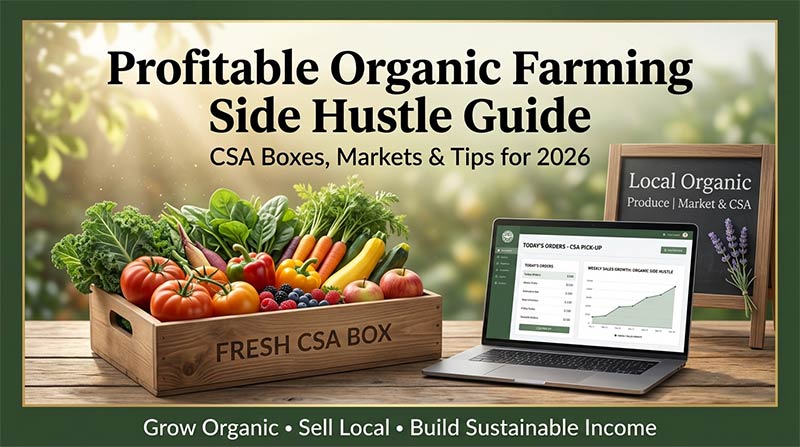
What a CSA Model Is and How It Works
A CSA, or Community Supported Agriculture arrangement, is a direct partnership between a farmer and a group of customers. Members pay upfront—usually for a full season or a set number of weeks—and in return receive a regular share of whatever the farm produces. The classic model shares both the risks and rewards of the growing season. If a late frost hits the tomatoes, the boxes may be lighter that week. If the zucchini explode, members take home extra.
Most modern CSAs run on a weekly or bi-weekly pickup or delivery schedule. Members choose a share size (small, standard, or large) and sometimes add-ons such as eggs, herbs, or flowers. Payment typically happens at the beginning of the season, which gives the farmer cash for seeds, soil amendments, and early labor before the first harvest. That upfront money is one of the biggest advantages over pure market selling.
In practice, a small CSA of 15–40 members is manageable for a side hustle. You plan a succession of crops so something is always ready. You pack boxes the night before or the morning of pickup. Members either come to the farm, a central location, or you drop boxes at a few convenient spots. Some CSAs now use simple online platforms for sign-ups and payment, which cuts down on paperwork.
The model builds loyalty. Members who see the same farmer week after week and taste produce harvested the same day tend to stay for multiple seasons. They also become your best marketing—telling friends, posting photos, and filling empty slots when someone moves away. For a side hustle, that predictability matters more than the occasional big market day.
Getting Started with Organic Farming on a Small Scale
You do not need to own land to begin. Many successful side hustles start on rented plots, backyard expansions, or shared community garden space that allows commercial growing. Aim for at least a quarter-acre of usable ground if you want 20–30 CSA shares plus some market surplus. Half an acre gives more breathing room.
Soil is the real foundation. Test it through your local extension service or a reputable lab. Most small organic operations focus on building organic matter with compost, cover crops, and minimal tillage. If your soil starts poor, plan a season of improvement before heavy production. Raised beds or intensive beds can increase yields on limited space and make weeding and harvesting easier.
Basic equipment stays simple and affordable. A sturdy wheel hoe or stirrup hoe, a good quality broadfork, hand tools, irrigation (drip lines save water and time), and a small walk-behind tiller or broadfork for bed preparation cover most needs. A greenhouse or high tunnel extends the season in many climates and is one of the highest-return investments once cash flow allows. Start with what you have and add tools only when a bottleneck appears.
Organic certification is optional for very small operations in many areas, but if you want to use the word “organic” in marketing, check current USDA rules and your state’s requirements. Many side hustles sell as “chemical-free” or “beyond organic” while following organic practices without the formal paperwork. That choice depends on your market and local competition.
Crop selection should match both your climate and what local customers actually buy. Leafy greens, radishes, carrots, beets, herbs, cherry tomatoes, summer squash, and salad mixes move well in boxes and at markets. Avoid crops that take too much space or have long harvest windows unless you have room. Succession planting—sowing small amounts every one to two weeks—keeps the harvest steady instead of one overwhelming glut.
Building and Managing CSA Boxes
A successful CSA box feels abundant, varied, and usable. Members should open it and immediately see meals taking shape. Aim for 6–10 items in a standard share, mixing greens, roots, fruits (when in season), herbs, and one or two “special” items that feel like a treat.
Pricing in 2026 typically ranges from $25–$45 per week for a standard share, depending on your region, share size, and whether delivery is included. Many farms offer a small share for couples or individuals at a lower price and a large share for families. Some add a mid-season top-up option or a winter share once cold storage or greenhouse production allows.
Here is a sample mid-summer CSA box and pricing structure that has worked well in practice:
| Item | Approximate Quantity | Notes | Est. Wholesale Value |
|---|---|---|---|
| Mixed salad greens | 8–10 oz | Fresh, multiple varieties | $4–5 |
| Cherry tomatoes | 1 pint | Ripe, flavorful | $3–4 |
| Cucumbers | 2–3 | Slicing or pickling | $2–3 |
| Summer squash / zucchini | 2–3 | Variety of colors | $2–3 |
| Carrots or beets | 1 bunch | With greens if possible | $3 |
| Fresh herbs | 1–2 bunches | Basil, cilantro, or parsley | $2–3 |
| Green beans or peas | ½–¾ lb | When available | $3 |
| Optional add-on: eggs | ½ dozen | Pastured if possible | $4–5 |
| Total estimated value | – | – | $23–29 |
| Member price (standard share) | – | Weekly | $32–38 |
The difference between wholesale value and member price covers your labor, packing, and profit margin. Early-season boxes lean heavier on greens and roots; late-season boxes include storage crops and the last of the summer fruit.
Manage the logistics carefully. Keep a simple spreadsheet or free online tool for member lists, payment status, and pickup preferences. Pack boxes the same way each week so members know what to expect. Include a short note or printed sheet with storage tips and one or two recipe ideas. That small touch reduces waste and increases satisfaction.
Common challenges include overestimating early yields and underestimating packing time. Build in a buffer by growing 10–15% more than the minimum needed. If a crop fails, communicate early and offer a make-up item or credit. Transparency builds trust faster than perfect boxes.
Selling at Farmers Markets Organic Produce
Farmers markets give you immediate cash flow and valuable feedback. Customers tell you what they like, what they skip, and what they wish you grew. That information improves both your market table and your CSA planning.
Finding the right markets takes a bit of research. Look for markets that already attract people interested in local food and that have space for new vendors. Some markets prioritize certified organic or chemical-free growers. Visit as a customer first. Note the crowd, the price points, and how other vendors present their produce. Apply early—good markets fill up.
Booth setup matters more than many beginners expect. A clean canopy, sturdy tables at a comfortable height, clear prices, and attractive displays of color and variety sell more produce than a disorganized pile. Keep a cooler or shade for delicate items. Accept cash and at least one digital payment method. Have bags ready and a small scale if you sell by weight.
Pricing should sit slightly above grocery organic prices for the same item, because yours is fresher and local. Watch what neighboring vendors charge and adjust. Bundle deals—three bunches of greens for a set price—move volume on slower days. Engage customers. Answer questions about growing methods, offer samples when allowed, and remember names of regulars. People return to vendors they like as much as to the produce itself.
Market days are long. Arrive early, stay until the end if possible, and plan for leftover product. Some goes into the next CSA boxes, some into value-added products if you have time, and some becomes compost. Tracking what sells and what doesn’t each week is one of the fastest ways to improve.
Marketing and Finding Customers
Word of mouth remains the strongest tool, but you still need to start the conversation. Create a simple website or landing page with your story, photos of the farm and produce, CSA details, and market schedule. Free or low-cost platforms work fine at the beginning. Use Instagram or a local Facebook group to post regular harvest photos and updates. Consistency matters more than perfect photography.
Partner with local businesses that share your customers—coffee shops, natural food stores, yoga studios, or co-working spaces. Offer a small discount for members who refer friends. Host an open farm day or a CSA member pickup event so people can see the growing operation. That connection turns one-time buyers into long-term members.
Email lists outperform social media for retention. Collect addresses at markets and from CSA inquiries, then send a short weekly or bi-weekly note with what’s in the box, market updates, and a personal observation from the farm. Keep it human. People respond to real voices more than polished marketing copy.
In 2026, many customers still discover local farms through online searches and community boards. Make sure your basic information is easy to find. List yourself on local CSA directories and farmers market association sites when available.
Legal Considerations, Food Safety, and Insurance
Rules vary by state and sometimes by county, so check early. Most places require a business license or at least registration if you sell food. Some areas have cottage food laws that cover certain value-added products but not fresh produce. If you deliver, understand any additional requirements.
Food safety starts with clean hands, clean water, and clean packing surfaces. Follow basic Good Agricultural Practices even if you are not certified. Keep records of what you plant, when you harvest, and any inputs used. That documentation protects you if questions arise.
Liability insurance is worth the cost. A general farm liability policy that covers market sales and CSA members on the property (if they pick up) is standard. Some markets require proof of insurance before you can set up. Talk to an agent who understands small farms—they exist and can explain options clearly.
If you use the word “organic,” follow the current USDA organic regulations or your state’s equivalent. Misuse can lead to fines and lost trust. When in doubt, describe your methods accurately without claiming certification you do not have.
Helpful starting points include the USDA organic guidelines and resources from organizations that support small farms and CSAs. Local extension offices remain one of the most practical free resources for soil tests, production advice, and regulatory questions.
Seasonality, Scaling, and Combining Both Channels
Farming is seasonal by nature. Plan for the lean months. Many side hustles focus on a strong spring-through-fall season and use winter for planning, tool repair, and soil building. A high tunnel or cold frames can extend the harvest window and keep some income flowing.
Combining CSA and markets creates balance. The CSA provides predictable cash and a committed customer base. Markets generate weekly income, move surplus, and attract new CSA members. Some farmers fill most boxes first and take only true surplus to market. Others treat markets as the primary sales channel and use a smaller CSA for stability. Test what fits your time and energy.
Scaling should be deliberate. Adding too many members too quickly leads to burned-out growers and inconsistent quality. Grow the CSA by 5–10 members per year once systems are solid. Hire help for peak harvest weeks before you expand the customer base. Keep detailed notes on labor hours so you know the true cost of each share.
Common challenges include weather surprises, labor shortages during harvest, and the constant pull between growing and selling. Build margin into your plans. Have a backup crop or two. Accept that some weeks will be harder than others. The farmers who last are the ones who treat the operation as a business while still enjoying the work of growing food.
Starting an organic farming side hustle with CSA boxes and farmers markets is realistic for someone willing to learn, work consistently, and start small. Begin by securing growing space and testing your soil. Decide on a manageable number of CSA shares and one or two markets. Price fairly, pack thoughtfully, and talk to your customers. Handle the basic legal and insurance steps early so they do not become surprises later.
The first season will teach you more than any guide. Track what works, adjust, and keep the focus on quality and relationships. Many people who began exactly this way now earn meaningful side income—and some eventually turn it into their main work.
If you are ready to explore more practical side hustle ideas, including other food-based businesses and local selling strategies, visit the guides collected at makecash.top. The next step is simply to start planning your first season. The customers looking for real local organic food are already out there.

Disclaimer: This is for educational purposes only and not personalized financial advice. Past performance doesn’t guarantee future results. Always do your own research or seek professional guidance.