
If you’re managing a short-term rental property—whether it’s a cozy urban apartment, a beach house, or a mountain cabin—you’ve likely wrestled with the decision of where to list it. Airbnb and VRBO (now part of Expedia Group) dominate the space, but they serve different crowds and come with distinct trade-offs in fees, guest types, and day-to-day management. After years of watching hosts navigate both, here’s a practical breakdown based on real-world performance in today’s market.
Why the Comparison Matters Now
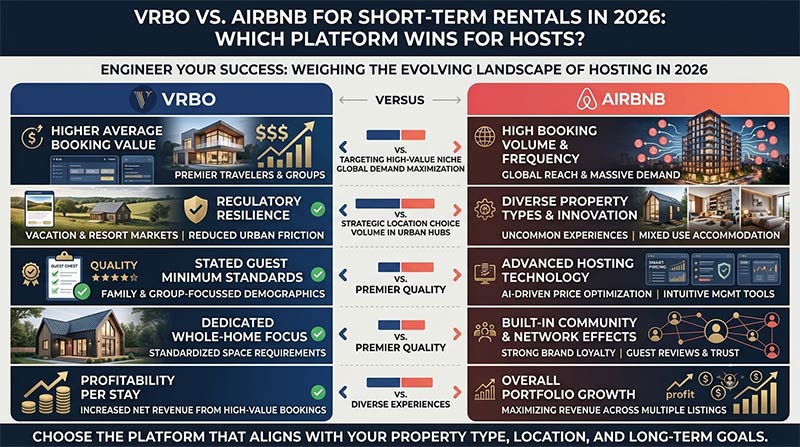
The short-term rental landscape has shifted. Airbnb still commands massive volume, but recent policy changes—like the move to a mandatory 15.5% host-only fee for most professional hosts using property management software—have hosts rethinking their strategies. VRBO often delivers higher nightly rates for family-oriented properties with fewer platform headaches in certain markets. Many successful hosts list on both and use channel managers to avoid double-bookings while capturing the best of each.
Diversification isn’t optional anymore. Relying solely on one platform feels risky in 2026, especially with evolving regulations and economic pressures on travel. I’ve seen properties in leisure destinations thrive more on VRBO, while urban spots lean heavily on Airbnb’s broader reach.
Key Differences at a Glance
| Aspect | Airbnb | VRBO |
|---|---|---|
| Target Guests | Solo travelers, couples, urban/short stays, experiences | Families, groups, longer leisure stays, whole homes |
| Market Strength | Urban + global volume; ~44-50% market share | Vacation destinations, coastal, larger properties |
| Host Fees (2026) | ~15.5% (host-only for PMS users) | ~5% commission + 3% processing (~8% total) |
| Guest Fees | Built into pricing transparency | 6-15% added at checkout |
| Booking Patterns | More last-minute, shorter stays | Longer stays, higher average rates |
| Control & Policies | Stronger host tools but guest-friendly policies | More host control over cancellations; stricter on some fees |
Data synthesized from industry reports and host experiences as of mid-2026.
Fees and What You Actually Keep
This is often the biggest pain point. On Airbnb, the shift to a flat ~15.5% host fee simplifies things for guests (they see cleaner pricing) but hits your payout harder, especially after cleaning fees and taxes.
VRBO’s model typically costs hosts around 8% total, with guests covering their service fee. This can lead to higher net earnings on equivalent bookings, though higher displayed totals sometimes cause cart abandonment. For high-volume properties, the subscription option (around $499–$699/year) can make sense to lower per-booking costs.
Perspective: Fees aren’t everything. A property pulling premium family rates on VRBO for 7-night stays often outperforms Airbnb’s higher volume of 2-3 night urban bookings once you factor in turnover costs (cleaning, linens, wear-and-tear). Run the numbers for your specific market using tools like AirDNA.
Guest Experience and Booking Volume
Airbnb wins on sheer traffic and variety. Its platform feels modern, with excellent search filters, reviews, and features like Experiences that appeal to younger travelers. However, increased competition means standing out requires top-tier photos, fast responses (under 1 hour for Superhost status), and competitive pricing.
VRBO feels more “traditional vacation rental.” Guests expect whole homes, often with amenities suited for families—think pools, game rooms, and space. Stays tend to be longer, reducing turnover hassle, and repeat bookings are common. The downside? Less brand recognition for some travelers and a clunkier interface according to many hosts.
Management Challenges and Tools
Managing listings across platforms demands efficiency:
- Calendar Sync: Use a channel manager (Guesty, Hospitable, or Lodgify) to keep availability updated in real-time.
- Pricing: Dynamic tools help adjust for weekends, holidays, and demand.
- Guest Communication: Airbnb’s messaging is seamless; VRBO can feel dated—automate where possible.
- Cleaning & Maintenance: Shorter Airbnb stays mean more frequent turnovers. VRBO’s longer bookings ease this but require deeper cleans.
Professional property management software pays for itself quickly. It centralizes inquiries, automates reviews requests, and provides analytics to optimize across channels.
From my perspective, the real winners treat short-term rentals like a business: professional photos, clear house rules, and building direct relationships for repeat guests (bypassing platform fees entirely). Platforms are great for discovery, but your website or email list is where the highest margins live.
Pros and Cons Summary
Airbnb Pros:
- Massive audience and discovery power.
- Excellent app and tools for hosts.
- Flexible property types (including rooms).
Airbnb Cons:
- Higher effective fees for pros.
- More competition and potential for stricter policy enforcement.
- Higher turnover workload.
VRBO Pros:
- Better for premium, longer stays.
- Lower host fees in many cases.
- Stronger in vacation hotspots.
VRBO Cons:
- Smaller overall traffic.
- Guest fees can deter some bookers.
- Platform feels less polished.
Which Should You Choose?
- Go heavy on Airbnb if you have an urban property, unique space, or are just starting out and need quick bookings.
- Prioritize VRBO for larger homes in destination markets where families book multi-generational trips.
- Best approach: List on both. Most experienced hosts do, using smart software to manage the complexity. Test and track performance for 3-6 months in your area—local demand trumps general advice every time.
In 2026, there’s no universal winner between VRBO and Airbnb—it’s about matching your property and goals to the right channel. The smartest operators build resilience by diversifying, focusing on guest experience, and gradually shifting toward direct bookings. Whether you’re a solo host or scaling a portfolio, staying adaptable is key in this evolving industry.
What’s your experience been like? Drop a comment if you’re managing properties on one or both platforms—I’d love to hear what’s working in your market.

Disclaimer: This is for educational purposes only and not personalized financial advice. Past performance doesn’t guarantee future results. Always do your own research or seek professional guidance.