
Real estate investing often feels out of reach if you’re staring at high home prices, rising interest rates, and the need for hefty down payments. But there’s a corner of the market where everyday people—teachers, side hustlers, even folks fresh out of college—are generating five- and six-figure incomes without ever owning a property or putting significant cash on the table. That corner is real estate wholesaling, and the no-money-down angle is what makes it accessible right now.
I’ve followed this space closely, and in a market still adjusting post-pandemic with more distressed sellers emerging from high rates and repair shocks, wholesaling remains one of the smartest entry points. It’s not “get rich quick,” but it rewards hustle, sharp analysis, and relationship-building more than a fat bank account. Here’s a practical breakdown of how it works and the strategies that minimize or eliminate your upfront capital.
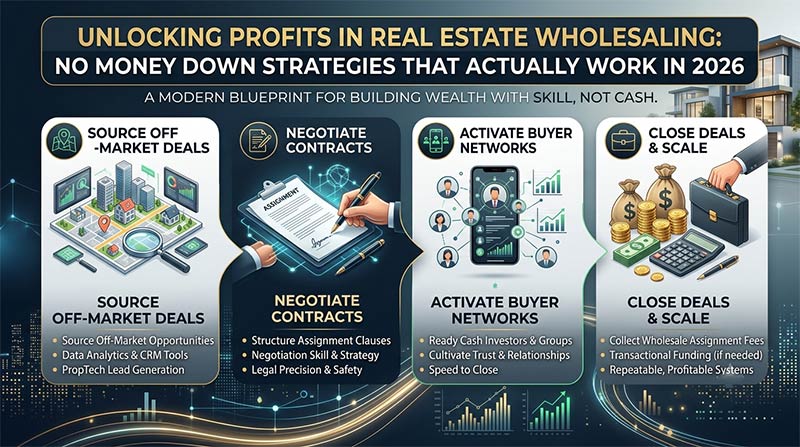
What Is Real Estate Wholesaling, Exactly?
Wholesaling is essentially matchmaking with contracts. You find a motivated seller (someone who needs to sell fast due to divorce, inheritance, job loss, or major repairs), negotiate a purchase contract at a discounted price, and then “assign” that contract to a cash buyer (usually a flipper or landlord) for a higher price. Your profit is the difference—the assignment fee.
You never take title in a pure assignment (though double closings are an option in some cases). This keeps risk low and capital requirements minimal. In 2026, with inventory tightening in many areas but motivated sellers still out there (think aging homeowners or landlords tired of turnover), the opportunities haven’t vanished—they’ve just gotten more targeted.
Why No Money Down Works (And Why It’s Not Zero Effort)
The beauty is you don’t need to qualify for loans, save for down payments, or fund rehabs. Many successful wholesalers start with under $1,000 total outlay—mostly for marketing and a small earnest money deposit (EMD) that can often be as low as $10–$500 or even waived in strong relationships.
That said, “no money down” doesn’t mean “no skin in the game.” You’ll invest time learning your market, building lists, and negotiating. My perspective: The people who treat this like a business—consistent daily actions—outperform the ones chasing shiny objects or expecting overnight success.
Top No Money Down Strategies for Wholesaling
Here are proven approaches that keep your cash outlay near zero:
- Direct Seller Marketing on a Shoestring Use free or low-cost channels: Craigslist, Facebook Marketplace/groups, driving for dollars (note distressed properties while commuting), and networking at local REIA (Real Estate Investors Association) meetings. Skip expensive direct mail at first. Focus on “We Buy Houses” style outreach but tailored to motivated niches like repair shock owners or landlords with vacancy issues.
- Contract Assignment with Minimal EMD Negotiate tiny or creative earnest deposits. Some experienced wholesalers use $10 or even a personal note in trusted relationships. Always include an assignment clause in your contract so you can transfer it smoothly.
- Partner with Cash Buyers Early Build your buyers list first through Meetup groups, BiggerPockets, or local investor Facebook pages. Once you have buyers lined up, you can sometimes structure deals with their input or even joint ventures where they cover minor costs.
- Virtual Wholesaling Target markets outside your city using tools like PropStream or public records. This expands your reach without travel costs. Many are doing this successfully remotely in 2026.
- Double Closing (When Needed) Close with the seller using funds from your end buyer simultaneously. This requires coordination with a title company but can eliminate the need for your own capital.
Quick Comparison of Strategies:
| Strategy | Upfront Cash Needed | Best For | Risk Level | Time to First Deal |
|---|---|---|---|---|
| Direct Marketing | $0–$500 | Beginners in local market | Low | 30–90 days |
| Virtual Wholesaling | $0–$300 | Remote hustlers | Medium | 45–120 days |
| Buyer-Driven Deals | Minimal | Those with networks | Low | Faster (15–60 days) |
| Double Closing | $0 (using buyer funds) | Experienced coordinators | Medium | Varies |
Step-by-Step: Getting Your First Wholesale Deal
- Step 1: Educate Yourself. Read books like “Wholesaling Inc.” resources or free YouTube channels, but verify with local laws. Join communities like BiggerPockets.
- Step 2: Analyze Deals. Learn the 70% rule (purchase price + repairs ≤ 70% of After Repair Value minus your fee). Use free comps from Zillow/Redfin initially, then upgrade.
- Step 3: Find Motivated Sellers. Skip trace contacts, send offers, build rapport.
- Step 4: Get Under Contract. Use simple purchase agreements with assignment language. Consult a local real estate attorney for templates.
- Step 5: Assign and Close. Market to your buyers list, assign the contract, and collect your fee at closing (often $5k–$20k+ per deal depending on market).
Real talk from observing the space: One wholesaler I tracked turned a single sharp deal into $86k profit by targeting the right distressed property—no personal funds used. Scale that with systems, and it compounds.
Legal Considerations and Risks (Don’t Skip This)
Wholesaling is legal in most places when done right, but rules vary wildly by state. Some require real estate licenses if you’re doing it as a business; others demand clear disclosures that you’re selling a contract, not the property. Always check local regulations—consult an attorney and avoid marketing properties you don’t control as if you own them.
Biggest risks: Losing earnest money if a deal falls through, reputation damage from overpromising, or IRS classifying you as a “dealer.” Mitigate by using an LLC, being transparent, and only contracting properties you believe you can move.
Is It Worth It in 2026?
In a word, yes—for the right person. Markets are more competitive than in the easy-money years, but motivated sellers from economic pressures haven’t disappeared. The edge goes to those who niche down (e.g., probates, pre-foreclosures, or landlord turnovers) and treat relationships as the real asset.
Wholesaling teaches negotiation, market reading, and deal structuring—skills that transfer to flipping, rentals, or even other businesses. It’s not passive income, but it can fund your next steps with low barrier entry. Start small, stay ethical, and build slowly. The “no money down” part is real, but the “no effort” version doesn’t exist.
Ready to dive in? Research your local market, connect with a few cash buyers this week, and take that first imperfect action. The deals are out there if you’re willing to hunt for them.

Disclaimer: This is for educational purposes only and not personalized financial advice. Past performance doesn’t guarantee future results. Always do your own research or seek professional guidance.