
The market for natural wellness, botanical self-care, and artisan herbal preparations has reached unprecedented heights. Today’s consumers are increasingly seeking transparent, handcrafted alternatives to mass-produced synthetic wellness goods. Whether it is an organic sleep-support tea blend, a soothing calendula skin salve, or an aromatic botanical bath soak, buyers are flocking to online platforms to find clean, small-batch products made with real plants and intentional craftsmanship.
For independent herbalists, formulators, and natural health enthusiasts, Etsy remains one of the premier platforms to tap into this eager buyer base. The platform provides immediate access to millions of active shoppers searching specifically for unique, handmade wellness items. However, building a thriving herbal remedy sales Etsy shop in 2026 requires far more than just filling glass jars with dried chamomile and putting up a listing.
When I first started selling herbal remedies on Etsy, I foolishly assumed that great ingredients and pretty labels were all I needed. Within three weeks, my shop was hit with a policy warning because I accidentally used prohibited health claims in my product titles. I had to revamp my entire product line, rethink my packaging, study regulatory guidelines, and completely overhaul my approach to Etsy SEO. That painful learning curve eventually turned into a 5-figure monthly business, but it taught me an essential truth: long-term success in the Etsy herbal niche requires a precise blend of legal compliance, exceptional product formulation, smart branding, and strategic shop optimization.
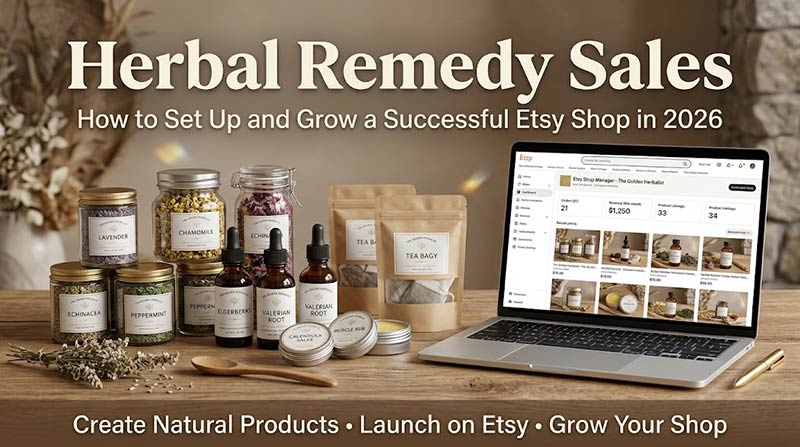
In this comprehensive guide, I will share the exact blueprint I used to build a scalable, compliant, and profitable botanical wellness business. You will learn the legal rules governing herbal products, how to source high-grade ingredients, how to create high-converting product listings, and how to drive consistent traffic to your shop. If you are exploring broader online income opportunities, be sure to check out our complete collection of Etsy business guides and explore other high-yield natural product side hustles.
1. Legal and Safety Considerations: Navigating Compliance and Policy
Before you blend your first batch of herbs or purchase product packaging, you must master the regulatory landscape. The botanical wellness niche is strictly monitored, and failing to adhere to platform rules and federal guidelines can lead to permanent shop suspension or legal liability.
       +-------------------------------------------------------+
       |           Etsy Herbal Seller Compliance               |
       +-------------------------------------------------------+
                                   |
         +-------------------------+-------------------------+
         |                                                   |
         v                                                   v
+-------------------------+                         +-------------------------+
|   Etsy Medical Claims   |                         |  FDA / FTC Regulations  |
|         Policy          |                         |                         |
|  - No disease claims    |                         |  - Structure/Function   |
|  - No cure / treat words|                         |  - Full ingredient list |
|  - Wellness focus only  |                         |  - Proper net weight    |
+-------------------------+                         +-------------------------+
Etsy’s Strict Medical Claims Policy
Etsy maintains an explicit, non-negotiable stance regarding medical claims. As a seller, you are prohibited from claiming that your product diagnoses, cures, treats, mitigates, or prevents any disease or medical condition.
For example, you cannot write:
- ❌ “This herbal salve cures eczema and psoriasis.”
- ❌ “Our elderberry syrup prevents flu and colds.”
- ❌ “Anxiety-relief tea to eliminate panic attacks.”
Instead, your language must focus strictly on general wellness, sensory experience, and botanical support:
- ✅ “Nourishing skin salve formulated with calming botanicals.”
- ✅ “Seasonal wellness syrup packed with antioxidant-rich elderberries.”
- ✅ “A soothing herbal tea blend designed to help you unwind before bedtime.”
Etsy’s automated detection algorithms scan listing titles, descriptions, tags, and even listing images for flagged terms. Even including customer reviews that make illegal medical claims can trigger a review. Make sure to familiarize yourself directly with the official Etsy Medical Claims Policy before writing your listing text.
Understanding FDA and FTC Regulations
In the United States, herbal products generally fall under one of three categories regulated by the Food and Drug Administration (FDA) and Federal Trade Commission (FTC):
- Cosmetics: Topical salves, body oils, floral baths, and facial steams.
- Dietary Supplements / Foods: Herbal teas, glycerites, powders, and botanical syrups.
- Drugs: Any product intended to treat or alter body functions. You do not want your Etsy products categorized as drugs, as this requires costly clinical approvals and strict oversight.
For detailed federal compliance, review the FDA Dietary Supplement Regulations and make sure your product labels include standard structural requirements:
- Common or scientific name of the product.
- Net contents (weight or fluid volume).
- Complete ingredient list in descending order by weight.
- Business name and contact address.
- Required FDA disclaimer for ingestibles: “These statements have not been evaluated by the Food and Drug Administration. This product is not intended to diagnose, treat, cure, or prevent any disease.”
Prohibited Ingredients and Plants on Etsy
Etsy explicitly bans certain substances regardless of their legal status in specific regions. Never attempt to sell products containing:
- CBD, THC, or hemp-derived cannabinoids.
- Kratom (Mitragyna speciosa).
- Toxic nightshades, wolfsbane, foxglove, or hazardous botanicals.
- Endangered plant species listed under CITES (such as wild-harvested Goldenseal or American Ginseng).
Liability Insurance and Batch Tracking
One critical step many beginner sellers overlook when setting up an herbal shop on Etsy is commercial product liability insurance. If a customer experiences an allergic reaction or skin irritation, insurance protects your personal assets. Look for specialized insurance providers catering to handcrafters and cosmetic makers (such as the Handcrafted Soap & Cosmetics Guild or insurance brokers offering general product liability).
Additionally, implement a strict Lot / Batch Tracking System. Assign a unique lot code to every batch you make, recording the sourcing date, vendor certificate of analysis (COA), and expiration date for every raw ingredient used. If an ingredient supplier issues a recall, you can immediately identify which customer orders were affected.
2. Choosing Your Product Niche & Sourcing Quality Botanicals
The natural wellness market is broad, so narrowing your focus to a distinctive niche helps you stand out in Etsy search results.
                   +---------------------------------------+
                   |     High-Margin Herbal Niches         |
                   +---------------------------------------+
                                       |
    +------------------+---------------+---------------+------------------+
    |                  |                               |                  |
    v                  v                               v                  v
+-------+      +---------------+               +---------------+      +-------+
| Herbal|      | Topicals &    |               |  Aromatherapy |      | Bath &|
| Teas  |      | Salves        |               |  & Steams     |      | Body  |
+-------+      +---------------+               +---------------+      +-------+
Profitable Herbal Product Categories
When planning your product line for your Etsy herbal products business 2026, consider starting with 3 to 5 core items in one or two complementary categories:
- Loose-Leaf Herbal Teas: High profit margins, lightweight for shipping, long shelf-life. Popular blends include evening unwind teas, digestive support infusions, and seasonal botanical blends.
- Topical Salves and Balms: Formulated with infused carrier oils (like jojoba or olive oil) and beeswax. Examples include calendula baby balms, arnica muscle rubs, and herbal lip ointments.
- Aromatherapy & Facial Steams: Blends of dried flowers, herbs, and essential oils designed for facial steaming or bath soaking. High aesthetic appeal and simple manufacturing process.
- Botanical Glycerites & Syrups: Alcohol-free liquid extracts made with vegetable glycerin or elderberry syrups. Note: Liquid ingestibles require strict pasteurization and shelf-stability testing.
Sourcing Herbs and Quality Assurance
Your finished products are only as good as the raw ingredients you use. Avoid buying herbs from unverified Amazon sellers or general grocery stores. Instead, establish accounts with established, reputable bulk botanical suppliers such as Mountain Rose Herbs, Starwest Botanicals, or Frontier Co-op.
When vetting suppliers, demand two things:
- USDA Organic Certification: Ensures herbs are grown without synthetic pesticides or harmful chemical fertilizers.
- Certificates of Analysis (COA): Verifies that the herbs have been tested for heavy metals, microbial contamination, yeast, mold, and identity.
Consult resources from the American Herbal Products Association (AHPA) for industry best practices on botanical identity verification and raw material storage.
Ethical Wildcrafting Guidelines
If you harvest plants yourself (wildcrafting), follow strict ethical guidelines:
- Never harvest more than 10% of a local plant population.
- Never wildcraft on protected land or without explicit landowner permission.
- Avoid foraging near roadsides, industrial areas, or agricultural land treated with pesticides.
- Clearly disclose wildcrafted ingredients on your product listings to build authentic trust with buyers.
3. Setting Up Your Etsy Shop: Branding, Policies, and Foundation
A cohesive, professional shop layout builds instant credibility with shoppers who are cautious about purchasing wellness goods online.
Crafting an Authentic Botanical Brand
Your shop name and visual aesthetics should immediately signal purity, craftsmanship, and botanical expertise.
- Shop Name: Choose a name that is memorable, easy to spell, and includes relevant keywords (e.g., VerdantApothecary, WildBloomBotanicals, MeadowCraftHerbs).
- Visual Palette: Opt for natural earth tones—sage greens, soft terracotta, warm beige, and deep botanical prints.
- Logo and Banner: Use high-resolution graphics that reflect artisan quality. Showcase your actual studio space, fresh dried herbs, or elegant amber packaging in your banner image.
Building E-E-A-T in Your “About” Section
Google and Etsy both prioritize sellers who display strong Experience, Expertise, Authoritativeness, and Trustworthiness (E-E-A-T). Use your Etsy “About” section to tell your story:
- Share your personal background in herbalism, medicine, or plantcraft.
- Highlight any certifications, workshops, or formal training you have completed.
- Explain your sourcing philosophy, clean studio practices, and commitment to sustainability.
- Post photos or short video clips of your crafting process—showing dried lavender being sorted, salves being poured, or tea being hand-blended.
Establishing Transparent Shop Policies
Clear shop policies eliminate friction and prevent customer disputes down the line:
+-----------------------------------------------------------------------+
|                        Essential Shop Policies                        |
+-----------------------------------------------------------------------+
|  Returns & Exchanges: Due to the personal hygiene and consumable      |
|  nature of herbal products, state whether opened items can be returned|
+-----------------------------------------------------------------------+
|  Processing Times: Clearly define production turnaround (e.g., 2-4    |
|  business days for hand-blended batches)                              |
+-----------------------------------------------------------------------+
|  Shipping Restrictions: Note restrictions on live botanicals or liquids|
|  for international destinations                                       |
+-----------------------------------------------------------------------+
4. Creating High-Converting Etsy Product Listings
A great product will not sell if your listing fails to capture attention or build buyer confidence. Optimizing your listings requires a balance between striking visual appeal, strong search engine optimization (SEO), and compliant, persuasive copy.
Product Photography & Styling
When buying wellness products online, customers rely heavily on visuals to gauge quality and safety.
+-------------------------------------------------------------------+
|                  5-Photo Listing Blueprint                        |
+-------------------------------------------------------------------+
|  Photo 1: Bright main shot (Amber jar/pouch on neutral background)|
|  Photo 2: Texture close-up (Rich salve texture, loose tea herbs)  |
|  Photo 3: Product in use (Pouring tea, applying balm to skin)     |
|  Photo 4: Ingredients layout (Raw lavender, rose petals, oils)    |
|  Photo 5: Packaging & Label detail (Showing full ingredient list) |
+-------------------------------------------------------------------+
- Lighting: Always shoot in natural daylight. Avoid harsh flash photography or warm indoor lights that yellow your product colors.
- Props: Use natural props like raw wooden boards, fresh linen, dried botanicals, vintage brass spoons, or mortar and pestles.
- Packaging Views: Show the exact container, cap, label, and box the customer will receive.
Mastering Etsy SEO for Herbal Products in 2026
To capture traffic for how to start an herbal remedy Etsy shop searches and long-tail buyer queries, optimize your titles, tags, and attributes.
- Focus on Buyer Intent: Think like a shopper searching for an experience or solution rather than a medical fix. Instead of searching “headache cure,” buyers search for “lavender peppermint roll on,” “calming head tension oil,” or “organic herbal tea gift set.”
- Utilize All 13 Tags: Fill every single tag slot with multi-word long-tail phrases. Avoid single words like “herbs” or “tea.” Use descriptive combinations like “loose leaf herbal tea”, “organic sleep blend”, “botanical body balm”, and “handcrafted salve”.
- Keyword Placement: Place your primary keyword phrase within the first 40 characters of your listing title and repeat key phrases naturally in the first two sentences of your product description.
Writing Compliant, High-Converting Descriptions
Structure your product descriptions so they are scannable and reassuring:
[ Paragraph 1: Emotional Hook & Botanical Focus ]
Indulge in a tranquil evening ritual with our Handcrafted Herbal Tea Blend. Formulated with organic chamomile flowers, soothing lemon balm, and fragrant lavender, this delicate infusion provides a peaceful sensory experience to help you wind down after a long day.

[ Section 2: Botanical Highlights (Bullet Points) ]
* Organic Chamomile: Renowned for its gentle, honey-like aroma and calming properties.
* Lemon Balm Leaf: Adds a bright, subtle citrus note to soothe the senses.
* French Lavender: Provides a deeply relaxing floral bouquet.

[ Section 3: Product Details & Specs ]
* Size: 2.0 oz (56g) eco-friendly stand-up pouch (approx. 25-30 servings).
* Ingredients: 100% Organic Chamomile, Organic Lemon Balm, Organic Lavender.
* Preparation: Steep 1 tablespoon in 8 oz of boiling water for 5-7 minutes.

[ Section 4: Mandatory Safety & FDA Disclaimers ]
* Safety Note: Consult with a healthcare professional before use if you are pregnant, nursing, or taking medications.
* Mandatory FDA Disclaimer: These statements have not been evaluated by the Food and Drug Administration. This product is not intended to diagnose, treat, cure, or prevent any disease.
5. Pricing Strategies and Eco-Friendly Packaging
Pricing herbal products requires accounting for hidden operational costs, loss during preparation, labor, and platform fees.
The Profitability Formula
Never price your items simply by matching your competitors. Calculate your exact Cost of Goods Sold (COGS) first:
$$\text{COGS} = \text{Raw Material Cost} + \text{Packaging Cost} + \text{Label Cost} + \text{Direct Labor}$$
To ensure a sustainable business, apply a minimum 3.5x to 4x markup on your COGS for retail sales:
$$\text{Retail Price} = \text{COGS} \times 3.5 \text{ (to } 4.0\text{)}$$
For example, if a glass jar of calendula salve costs $3.20 in materials and labor to produce, your retail price on Etsy should be set between $11.50 and $13.00. This margin absorbs Etsy listing fees, transaction fees, payment processing costs, ad spend, and leaves a healthy profit for your business.
Packaging Essentials & Unboxing Experience
In the natural wellness space, eco-conscious packaging is an expectation, not a bonus.
- Containers: Glass amber jars, cobalt bottles, and tin containers preserve delicate light-sensitive herbs while looking upscale.
- Pouches: Recyclable or compostable Kraft paper stand-up pouches with window views work exceptionally well for dry teas and bath salts.
- Labeling: Ensure your labels are grease-proof and waterproof (especially for oils and salves). Include crisp typography, your logo, batch number, weight, and complete ingredient lists.
- The Unboxing Touch: Wrap items in unbleached tissue paper, seal with a branded sticker, and include a hand-written thank you note printed on recycled seed paper.
6. Etsy Herbal Remedy Startup Cost & Profit Matrix
To help you plan your initial investment and evaluate potential product lines, the table below provides a detailed breakdown of startup costs, batch margins, and production difficulty across popular botanical product categories.
| Product Category | Typical Startup Cost (Batch of 50) | Average COGS per Unit | Suggested Retail Price | Profit Margin (%) | Production Difficulty | Key Compliance Focus |
| Loose-Leaf Herbal Tea | $120 – $180 | $2.50 – $3.50 | $12.00 – $15.00 | 70% – 78% | Low | Net weight accuracy, food-grade pouch compliance, allergen disclosure. |
| Infused Botanical Salves | $180 – $260 | $3.20 – $4.50 | $14.00 – $18.00 | 68% – 76% | Medium | Cosmetic labeling laws, oil shelf-life, rancidity testing. |
| Aromatherapy Bath Soaks | $90 – $140 | $2.00 – $3.00 | $10.00 – $13.00 | 72% – 80% | Low | Essential oil dilution safety, moisture barrier packaging. |
| Facial Botanical Steams | $80 – $120 | $1.80 – $2.50 | $11.00 – $14.00 | 78% – 83% | Low | Clear directions, eye sensitivity warnings, airtight seals. |
| Herbal Glycerites / Extracts | $200 – $320 | $4.00 – $5.50 | $18.00 – $24.00 | 70% – 77% | High | Good Manufacturing Practices (GMP), glass dropper safety, precise dosing guidance. |
7. Marketing Strategies to Drive Targeted Traffic
Relying solely on internal Etsy search traffic limits your sales growth. To build a robust Etsy herbal products business 2026, you must drive targeted external traffic and create an independent audience.
                  +-----------------------------------+
                  |     Multi-Channel Traffic Funnel   |
                  +-----------------------------------+
                                    |
     +------------------------------+------------------------------+
     |                              |                              |
     v                              v                              v
+------------------+       +------------------+       +------------------+
| Visual Platforms |       |     Etsy Ads     |       |    Email List    |
| (Pinterest/Insta)|       |  (High-intent    |       | (Package inserts,|
| - Herbal recipes |       |   search terms)  |       |  lead magnets)   |
| - Process videos |       +------------------+       +------------------+
+------------------+
Visual Platforms: Pinterest & Instagram
The botanical wellness audience is deeply active on visual social media platforms:
- Pinterest: Create vertical pins showcasing herbal educational content (e.g., “5 Botanicals for a Relaxing Night Ritual” or “How to Prepare a Botanical Facial Steam”). Link these pins directly to your Etsy listings. Pinterest acts as a search engine and delivers long-term traffic for months after posting.
- Instagram Reels & TikTok: Share short, satisfying videos of your production process—pouring melted golden beeswax into amber jars, hand-mixing colorful flower petals, or designing new labels. Behind-the-scenes content builds incredible authenticity and connection.
Leveraging Etsy Ads Wisely
When first launching your herbal remedy sales Etsy shop, start with a modest Etsy Ads budget ($2 to $5 per day).
- Turn on ads only for your top 3 best-looking, fully optimized listings.
- Monitor search terms after two weeks. Turn off ads for terms that cost clicks without generating sales.
- Increase advertising spend gradually only on items that demonstrate a strong organic conversion rate (above 2.5%).
Building an Off-Etsy Email List
Etsy owns your customer list, but you can build your own direct audience by including package inserts in every order.
- Include a business card featuring a QR code linking to an off-Etsy landing page.
- Offer an incentive, such as: “Scan to download our Free Printable Guide: 10 Herbal Rituals for Daily Wellness + Get 15% off your next order.”
- Use your email list to announce new seasonal product drops, holiday gift sets, and direct shop launches. For more strategies on growing a sustainable online store, read our in-depth guides on wellness products guides.
8. Customer Service, Order Fulfillment, and Scaling
As your order volume grows, maintaining consistent product quality and flawless customer service becomes your top operational priority.
Handling Customer Inquiries Professionally
Shoppers frequently message sellers asking for personalized medical advice (e.g., “Will this tea cure my chronic stomach acid?”).
Develop a standardized, polite, and legally compliant reply template:
“Hello [Customer Name], thank you so much for reaching out! While our Digestive Wellness Tea is hand-blended with organic peppermint and ginger to offer a soothing, warm sensory beverage, we are not licensed medical professionals and cannot provide medical advice or recommend herbs for specific medical conditions. We always advise consulting with your physician or a qualified holistic practitioner for tailored health guidance. Please let me know if you have any questions about our ingredients!”
Hygienic Batch Production & GMP Principles
Even if you craft products in a home studio, adopt core principles from Good Manufacturing Practices (GMP):
- Sterilization: Sanitize all glass jars, stainless steel mixing bowls, and utensils with isopropyl alcohol or steam before production.
- Protective Wear: Wear hair nets, gloves, and dedicated aprons during batch preparation to prevent contamination.
- Humidity Control: Store dried herbs in airtight containers away from direct sunlight and moisture to prevent mold and loss of potency.
+-----------------------------------------------------------------------+
|                    Standard Batch Manufacturing SOP                   |
+-----------------------------------------------------------------------+
|  1. Inspect & Log Raw Ingredients (Check COA and lot numbers)        |
|  2. Sanitize Workstation, Utensils & Glass Containers                 |
|  3. Weigh Ingredients using Calibrated Digital Scale                  |
|  4. Blend / Formulate under Controlled Temperature & Humidity         |
|  5. Fill Containers & Attach Water-Proof Labels with Lot #            |
|  6. Perform Quality Control & Store in Climate-Controlled Area        |
+-----------------------------------------------------------------------+
Scaling Beyond Etsy
Once your Etsy shop achieves consistent sales and positive 5-star reviews, consider these expansion avenues:
- Independent E-Commerce Site: Launch your own website using Shopify or WooCommerce to cut platform fees and fully control your brand environment.
- Wholesale Accounts: Offer wholesale pricing to local boutiques, yoga studios, spas, and independent gift shops using platforms like Faire.
- Seasonal Subscription Boxes: Create quarterly botanical self-care boxes featuring limited-edition seasonal tea blends, salves, and bath products to build predictable recurring revenue.
Launch Your Etsy Herbal Business with Confidence
Starting a successful herbal remedy sales Etsy shop in 2026 is one of the most fulfilling creative side hustles available today. By pairing a deep respect for natural botanicals with rigorous compliance, beautiful visual branding, and disciplined Etsy SEO, you can build a highly profitable business that genuinely enriches your customers’ daily wellness routines.
Remember that trust is your most valuable currency. Focus on transparent labeling, compliant marketing, ethical sourcing, and delivering an unforgettable unboxing experience. Take it step-by-step: refine your first 3 core products, perfect your photography, set up your legal foundation, and publish your listings.
Ready to explore additional profitable online business models and side hustle strategies? Explore our comprehensive library of actionable Etsy business guides and discover step-by-step tutorials on natural product side hustles to build your financial independence today!

Disclaimer: This is for educational purposes only and not personalized financial advice. Past performance doesn’t guarantee future results. Always do your own research or seek professional guidance.