
If you’ve ever wished for a side income that doesn’t require packing boxes, managing inventory, or answering shipping questions at 11 p.m., digital products on Etsy might be exactly what you’re looking for. No physical stock. No returns for broken items. Once a product is created and listed, it can sell while you sleep, work your day job, or take a weekend off.
In 2026, Etsy remains one of the strongest platforms for this model. Millions of buyers still come looking for printable planners, wedding templates, digital stickers, worksheets, and custom graphics. The platform has refined its search and recommendation systems, and digital downloads continue to perform well because delivery is instant and margins are high.
I’ve been selling digital products on Etsy for several years. What started as a small experiment with a handful of printables has grown into a steady stream of passive income. Some months are quieter than others. Some products sell consistently for years with almost no extra work. Others need regular updates. The difference usually comes down to research, listing quality, and realistic expectations.
This guide walks through everything I’ve learned: why digital products work so well for passive income on Etsy, which product types tend to sell, how to set up and list them properly, pricing strategies, marketing that actually drives ongoing sales, useful tools, and the mistakes that slow most new sellers down. You’ll get a practical, step-by-step path rather than hype.
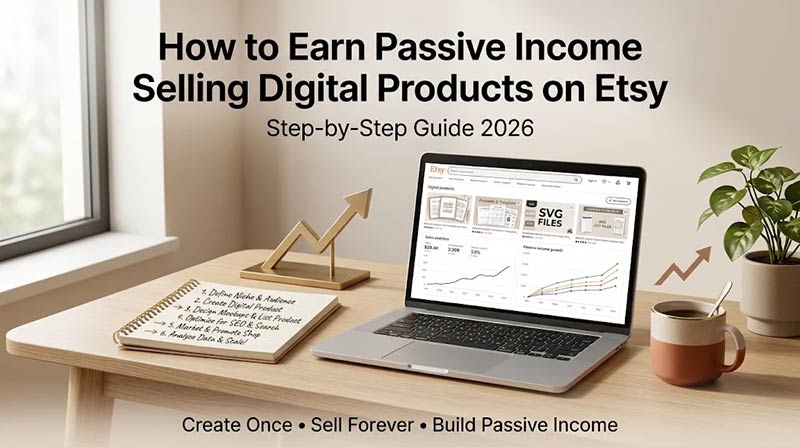
Why Digital Products Are Ideal for Passive Income on Etsy
Digital products remove almost every traditional retail headache. There is no inventory to buy or store. There are no shipping costs, no packaging materials, and no damaged-item refunds. Once the file is uploaded, Etsy handles delivery automatically after purchase.
The economics are strong. After Etsy’s fees (listing fee plus transaction and processing fees), many digital products still leave you with 70–90% of the sale price as profit, depending on pricing and advertising. Compare that to physical products where materials, shipping, and returns can eat half or more of the revenue.
Because delivery is instant, customer experience is usually smooth. Buyers get their files right away, which reduces support questions. Happy customers leave reviews, and reviews help future sales. Over time, a well-optimized listing can generate sales with very little ongoing effort.
Passive income on Etsy is not completely hands-off. Listings need occasional refreshes, seasonal products need updates, and customer questions still appear. But compared with physical goods or service-based work, the time required after the initial creation phase is much lower. That is why so many people focus on Etsy digital downloads for passive income.
For more ideas on building side income streams, see our passive income ideas collection.
Best Types of Digital Products That Sell Well on Etsy
Not every digital product sells equally well. Some categories have steady demand year after year. Others spike seasonally or fade quickly. Here are the types that have performed most reliably in my shop and across many successful sellers I follow.
Printables
Calendars, wall art, affirmation cards, chore charts, meal planners, and budget trackers. These are popular because buyers can print them at home or at a local print shop. High perceived value, relatively easy to create once you have a good design system.
Planners and Journals
Daily, weekly, monthly planners, habit trackers, gratitude journals, and specialized planners (wedding planning, content calendars, fitness). Digital planners that work with GoodNotes or Notability have grown a lot. Printable versions still sell strongly too.
Templates
Canva templates for social media, resumes, invoices, business cards, presentations, and email newsletters. Wedding invitation templates, menu templates, and event programs also move well. Buyers love editable files they can customize.
Graphics and Clip Art
Seamless patterns, sticker sets, logo elements, and commercial-use graphics. These appeal to other creators and small business owners. Licensing clarity is important here.
Worksheets and Educational Printables
Homeschool resources, therapy worksheets, teacher materials, and adult learning sheets. Niche educational content can have less competition than generic printables.
Digital Stickers and Ephemera
Especially popular with digital planner users. Bundles often outperform single packs.
Here’s a quick comparison of the main product types based on what I’ve observed:
| Product Type | Difficulty to Create | Profit Potential | Competition Level | Best for Passive Income |
|---|---|---|---|---|
| Printables (art, charts) | Low–Medium | Medium–High | High | Strong |
| Planners & Trackers | Medium | High | High | Very Strong |
| Canva / Editable Templates | Medium | High | Medium–High | Very Strong |
| Graphics & Clip Art | Medium–High | Medium–High | Medium | Strong |
| Educational Worksheets | Medium | Medium–High | Medium | Strong |
| Digital Stickers | Low–Medium | Medium | High | Good |
In my experience, planners and editable templates have produced the most consistent long-term sales. Printables are easier to start with and still generate reliable income when the design and keywords are solid.
For a deeper look at product ideas, check our digital products guide.
Step-by-Step Process to Get Started Selling Digital Products on Etsy
1. Set Up Your Etsy Seller Account
Go to Etsy and open a seller account. You’ll need to choose a shop name, add a profile photo and banner, write a short About section, and connect a payment method. Keep the shop name professional and memorable. Avoid names that lock you into one narrow niche if you plan to expand.
Review Etsy’s seller policies carefully, especially the sections on digital downloads and prohibited items. You can find the official guidance in the Etsy Seller Handbook.
2. Research Before You Create
This step saves more time than any other. Use Etsy’s search bar and look at what already sells. Note titles, price points, number of reviews, and listing photos. Tools like eRank or Marmalade can help with keyword and competition data, but free research works too.
Look for gaps: popular products with average reviews or outdated designs. Seasonal demand matters—planners sell year-round but peak in December and January. Wedding items peak in spring and early summer.
3. Create Your Products
You don’t need expensive software to start. Many successful sellers use Canva (free or Pro), Affinity Designer, or Adobe products. For printables, design at high resolution (300 DPI) in the correct print sizes. For digital planners, consider both printable and hyperlinked versions.
Create in batches when possible. A cohesive collection of related products converts better than random one-offs. Include clear instructions or a simple how-to PDF with every download.
4. Prepare Files for Delivery
Etsy allows multiple files per listing (up to a certain size limit). Common practice is to upload a zip folder containing the main files plus a simple instruction sheet. Name files clearly so buyers know what they’re downloading.
Test the download process yourself before listing.
5. Write and Optimize Listings
This is where most of the long-term results come from. More on high-converting listings in the next section.
6. Set Pricing and Publish
Start with competitive but not rock-bottom pricing. Publish, then monitor performance. Etsy ads can accelerate early sales if used carefully.
7. Deliver and Support
Etsy delivers the files automatically. Still, answer messages promptly. Clear communication builds reviews and repeat buyers.
How to Create High-Converting Product Listings
A good product with a weak listing will underperform. A solid listing can make an average product sell.
Title
Lead with the main keyword and include secondary ones naturally. Example: “Digital Wedding Planner Printable | Editable Canva Template | Budget Tracker & Timeline.” Keep it under 140 characters when possible and readable.
Photos / Mockups
Use clean mockups that show the product in use. Lifestyle images help buyers imagine themselves using it. Tools like Placeit or free mockup sites work well. Show multiple pages or variations. Include a simple text overlay with the product name if it improves clarity.
Description
Write for both humans and search. Start with a clear benefit-focused opening. List what’s included in bullet points. Explain how to use the files. Add size information, software requirements (if any), and licensing notes. End with a soft call to action and shop policies.
Tags and Attributes
Use all 13 tags. Mix broad and specific terms. Fill out every relevant attribute (occasion, primary color, etc.). These help Etsy’s filters.
SEO Basics
Research what buyers actually type. Include those phrases in the title, tags, and naturally in the description. Avoid keyword stuffing.
In my shop, the listings that convert best almost always have strong mockups, clear “what’s included” sections, and titles that match real search language.
Pricing Strategies and Profit Margins
Digital products have wide pricing ranges. Simple printables often sell for $3–$8. Comprehensive planners or template bundles commonly range from $12–$35. Premium or highly specialized products can go higher.
A practical approach:
- Research similar products and note the middle of the range.
- Price slightly above the cheapest options if your quality and presentation are better.
- Offer bundles at a discount compared with buying items separately. Bundles increase average order value.
- Test price changes after you have some sales data. Small increases often have little impact on conversion if the listing is strong.
After Etsy fees (roughly 6.5% transaction + payment processing + listing fee), most digital sellers keep the majority of the sale price. Advertising costs are the main variable expense. Many of my best products maintain healthy margins even with moderate ad spend.
Don’t race to the bottom. Extremely low prices can attract more refund requests and lower perceived value.
Marketing Methods That Drive Ongoing Sales
Organic search and Etsy ads are the two biggest drivers for most digital sellers. Beyond that:
- Etsy Ads: Start with a modest daily budget on your strongest listings. Monitor cost per click and conversion. Pause underperformers.
- Social Media: Pinterest remains effective for printables and planners. Short-form video (showing the product being used) works on Instagram and TikTok. Consistency matters more than perfection.
- Email List: Collect emails (ethically) through a freebie or thank-you page and send occasional updates or new product announcements.
- Cross-promotion: Mention related products in your listings and shop announcement.
- Seasonal refreshes: Update mockups and titles before peak seasons.
The most reliable long-term marketing is a well-optimized listing that ranks and converts. Paid ads and social traffic amplify what already works.
For more side hustle marketing ideas, see our side hustles section.
Tools That Help Automate and Scale Digital Product Sales
A few tools make a noticeable difference:
- Canva — Fast design and easy template creation. Many sellers build entire shops with it.
- eRank or similar — Keyword research and listing analysis.
- Placeit or Creative Market mockups — Professional product images without photography skills.
- Google Sheets or Notion — Tracking sales, ideas, and seasonal calendars.
- Etsy’s own stats and ads dashboard — Essential for understanding what works.
Automation is limited on Etsy itself, but good systems for design, file organization, and listing templates save hours every week. Once a product is live and ranking, the ongoing time investment drops significantly.
External resources worth bookmarking include the Etsy Seller Handbook and design resources on sites like Creative Market for quality mockups and elements.
Realistic Expectations and Common Mistakes to Avoid
Passive income from Etsy digital products is real, but it is rarely overnight and rarely completely passive from day one.
Most new shops take weeks or months to gain traction. Early sales often come from ads or social sharing. Consistent ranking usually requires good reviews and ongoing optimization. Earnings vary widely. Some sellers make a few hundred dollars a month. Others reach several thousand. A small percentage build six-figure shops. Results depend on product quality, niche selection, listing skill, and consistency.
Common mistakes I see (and have made myself):
- Creating products without research and ending up with low demand.
- Weak mockups or cluttered listing photos.
- Underpricing and then struggling to raise prices later.
- Ignoring customer messages or feedback.
- Expecting sales without any marketing or optimization effort.
- Copying other listings too closely instead of adding original value.
- Neglecting seasonal opportunities or failing to update older listings.
The sellers who do well treat it like a small business: they research, improve, and stay consistent. They also accept that some products will underperform and move on quickly.
Building Real Passive Income with Digital Products on Etsy
The most realistic path looks like this: research demand carefully, create high-quality products in a focused niche or collection, write clear and keyword-aware listings with strong mockups, price for both conversion and profit, use Etsy ads and light social promotion to gain initial traction, then optimize based on data. Over time, a portfolio of solid listings can generate ongoing sales with relatively low maintenance.
Consistency and continuous improvement matter more than any single “hack.” Digital products on Etsy reward people who treat the work seriously without expecting instant riches.
If you’re ready to go deeper, explore more practical guides on Etsy tips, digital product strategies, and passive income ideas at makecash.top. Start with one well-researched product, list it properly, and build from there. The compound effect of good listings is real.

Disclaimer: This is for educational purposes only and not personalized financial advice. Past performance doesn’t guarantee future results. Always do your own research or seek professional guidance.