
The fitness industry in 2026 is experiencing an unprecedented boom. People are prioritizing health, longevity, and functional movement more than ever before. Whether you want to escape the corporate grind, build a flexible fitness side hustle, or transition into full-time remote fitness coaching, there has never been a better time to start.
However, turning your passion for exercise into a lucrative career requires a clear, strategic approach. You cannot simply walk into a commercial gym or open an online coaching account and start training clients. You need a respected credential to build trust, secure insurance, and protect your clients.
When I started my personal training journey over fifteen years ago, I felt overwhelmed by the sheer volume of choices. Everyone claimed to offer the “best” program, yet few provided real guidance on how to move from studying to earning a liveable income. Since then, I have trained hundreds of direct clients, managed fitness facilities, and mentored dozens of aspiring coaches through the certification process.
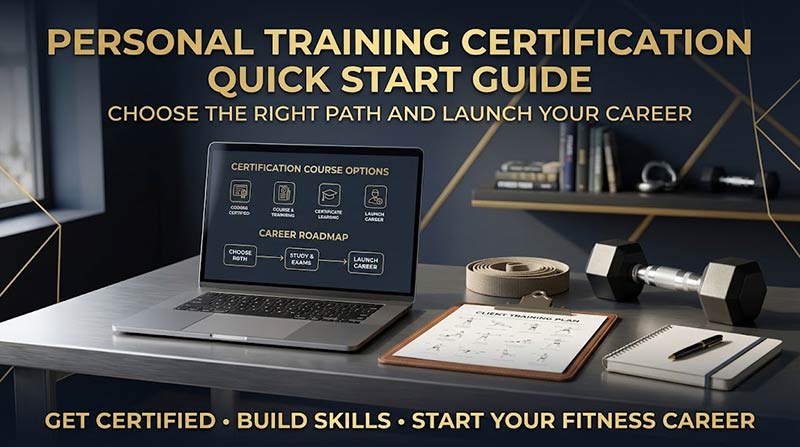
This personal trainer certification guide serves as your actionable blueprint. Below, you will discover the best personal training certifications for 2026, a clear breakdown of costs and timelines, a step-by-step preparation plan, and the exact steps required to land your first paid clients immediately after passing your exam.
Why Getting Certified Matters (Beyond Just a Piece of Paper)
Some aspiring coaches wonder if a formal credential is truly necessary, especially when social media allows anyone to showcase workouts. The short answer is yes. Getting certified is non-negotiable if you want to build a sustainable, professional, and legal business.
1. Client Trust and Professional Credibility
A national certification proves that you understand human anatomy, exercise physiology, biomechanics, and evidence-based program design. Clients trust you with their physical well-being, movement mechanics, and injury prevention. Demonstrating that you hold an accredited credential immediately separates you from uncertified influencers.
2. Legal Protection and General Liability Insurance
You cannot purchase commercial or independent fitness liability insurance without an accredited personal training certification. If a client injures themselves under your supervision without insurance, your personal assets could be exposed to legal claims. Insurance policies require verified credentials from recognized certifying organizations.
3. Gym Hiring Requirements and Online Platform Standards
Virtually every commercial health club, boutique studio, and corporate fitness facility requires trainers to hold an NCCA-accredited (National Commission for Certifying Agencies) or DEAC-accredited credential. Furthermore, reputable digital coaching platforms and marketplace apps require proof of certification before allowing you to onboard paying clients.
Top Personal Training Certifications in 2026: The Big Players
Navigating the landscape of personal training certifications quick start options means choosing between a handful of gold-standard organizations. Each organization offers unique strengths depending on whether you want to focus on corrective exercise, general wellness, sports performance, or online coaching.
1. NASM (National Academy of Sports Medicine)
- Best Overall for Commercial Gyms and Corrective Exercise
- Accreditation: NCCA
NASM remains one of the most widely recognized credentials in the fitness industry. Its signature framework—the Optimum Performance Training (OPT) model—guides trainers through a structured 5-phase progression: Stabilization Endurance, Strength Endurance, Muscular Development, Max Strength, and Power.
NASM excels at teaching posture evaluation, movement screening, and corrective exercise techniques. If you plan to work in a high-end commercial health club or focus heavily on joint health and functional movement, NASM is a premier choice.
Learn more directly at NASM Official Site.
2. ACE (American Council on Exercise)
- Best for Behavior Change and Habit Coaching
- Accreditation: NCCA
ACE places a strong emphasis on client-centered coaching, lifestyle modifications, and communication strategies through its Integrated Fitness Training (IFT) model. ACE recognizes that program design means little if a client lacks the psychological drive or habits to remain consistent.
If your ideal client base consists of everyday individuals seeking sustainable weight management, lifestyle changes, and general wellness, ACE offers one of the most practical and accessible curricula available.
Explore their offerings at ACE Fitness Official Site.
3. ISSA (International Sports Sciences Association)
- Best for Fast-Tracking, Self-Paced Learning, and Business Readiness
- Accreditation: DEAC (with optional NCCA exam route via NCCPT)
ISSA has revolutionized online learning for fitness professionals. Their flexible, fully self-paced platform allows students to study at their own speed, making it an exceptional choice for busy professionals switching careers.
ISSA’s curriculum integrates basic business setup, client onboarding, and practical sales skills alongside core exercise science. It is ideal for trainers who want to build an independent studio or launch an online training business right out of the gate.
Check out program details at ISSA Online Official Site.
4. ACSM (American College of Sports Medicine)
- Best for Clinical Focus, Special Populations, and Evidence-Based Science
- Accreditation: NCCA
ACSM is widely considered the academic backbone of the exercise science world. Their clinical research shapes public health guidelines globally.
The ACSM Personal Trainer credential focuses deeply on exercise prescription, clinical physiology, risk stratification, and working with special populations (such as individuals recovering from cardiovascular disease, diabetes, or metabolic conditions). It is well-suited for coaches seeking work in medical fitness centers, physical therapy clinics, or wellness institutions.
Review guidelines at ACSM Official Site.
5. NSCA (National Strength and Conditioning Association)
- Best for Athletic Performance and Strength Coaching
- Accreditation: NCCA
While the NSCA is famous for its Certified Strength and Conditioning Specialist (CSCS) credential for collegiate and professional sports, their NSCA-CPT (Certified Personal Trainer) program applies the same athletic rigor to general population clients.
If your focus centers on heavy barbell training, athletic power output, speed work, and performance metrics, the NSCA curriculum provides top-tier technical depth.
Comparison of Major Personal Training Certifications
To help you make an informed decision on your quick start personal training certification journey, here is a breakdown comparing the primary organizations:
| Certification Body | Estimated Cost | Typical Study Time | Accreditation | Primary Focus / Best For |
| NASM-CPT | $699 – $1,299 | 8 – 12 Weeks | NCCA | Corrective exercise, OPT model, commercial gym employment |
| ACE-CPT | $650 – $1,000 | 8 – 12 Weeks | NCCA | Behavior modification, functional movement, general health |
| ISSA-CPT | $600 – $999 | 4 – 8 Weeks | DEAC / NCCA | Flexible study, online coaching, combined fitness/business |
| ACSM-CPT | $400 – $800 | 10 – 16 Weeks | NCCA | Clinical exercise prescription, special populations, research |
| NSCA-CPT | $450 – $750 | 10 – 16 Weeks | NCCA | Athletic performance, strength development, sports focus |
How to Choose the Right Certification for Your Goals, Budget, and Timeline
Selecting the right certification depends on three core factors: where you plan to work, how fast you want to launch, and how much capital you can allocate up front.
                  [ Define Your Primary Career Goal ]
                                   │
         ┌─────────────────────────┼─────────────────────────┐
         ▼                         ▼                         ▼
 [ Commercial Health Club ]  [ Online / Independent ]  [ Clinical / Athletics ]
         │                         │                         │
  (NASM or ACE)            (ISSA or NASM)           (ACSM or NSCA)
1. Align with Your Target Work Environment
- Commercial Gyms (Equinox, Planet Fitness, Gold’s Gym): NASM and ACE are widely favored by gym directors due to their standardized assessment protocols.
- Online Coaching & Independent Fitness Business: ISSA and NASM offer streamlined digital study options and integrated business modules that fast-track self-employment.
- Medical Fitness & Performance Centers: ACSM and NSCA are respected by physical therapists, exercise physiologists, and athletic directors.
2. Evaluate Budget and Payment Options
Most major organizations offer zero-interest monthly payment plans. While basic exam-only vouchers cost between $400 and $600, full study suites (including practice exams, video libraries, textbook access, and job guarantees) range from $700 to $1,300. Always factor in the cost of an active CPR/AED certification ($50–$100), which is mandatory before taking any exam.
3. Consider Your Launch Timeline
If you need to become certified quickly to secure a job offer, self-paced programs like ISSA or accelerated NASM study paths allow dedicated students to complete the material and take their exam within 4 to 6 weeks. If you prefer taking time to absorb deep clinical knowledge, budget 12 to 16 weeks for ACSM or NSCA.
Step-by-Step Guide: How to Get Personal Training Certified Fast
If you are looking for a quick start personal training certification protocol, follow these five steps to move from start to pass in under 90 days.
  Step 1: Obtain CPR/AED Certification (Hands-on or Blended)
    │
  Step 2: Choose and Purchase Your Certification Package
    │
  Step 3: Build a Targeted 6-Week Study Schedule
    │
  Step 4: Master Assessment, Anatomy, and Program Design Domains
    │
  Step 5: Pass the Accredited Exam (In-Person or Live-Proctored)
Step 1: Secure Your CPR/AED Credential
Before sitting for any accredited exam, you must hold a valid CPR (Cardiopulmonary Resuscitation) and AED (Automated External Defibrillator) certification. Organizations like the American Heart Association (AHA) or Red Cross offer hands-on or blended courses that take 3 to 4 hours to complete.
Step 2: Select and Purchase Your Package
Purchase your study bundle directly from your chosen organization’s official website. Opt for packages that include practice exams and domain quizzes; practice questions are critical for mastering exam formats.
Step 3: Build an Action-Oriented Study Schedule
Avoid reading the textbook cover-to-cover like a novel. Treat your preparation like an active study project:
- Weeks 1–2: Master functional anatomy, joint actions, plane of movement, and energy systems.
- Weeks 3–4: Focus heavily on movement assessments, kinetic chain checkpoints, posture analysis, and fitness testing protocols.
- Weeks 5: Dive into exercise selection, periodization, progression/regression rules, and special populations.
- Week 6: Complete 3 to 5 full-length practice exams until you consistently score above 85–90%.
Step 4: Focus Study Time on High-Weight Exam Domains
Accredited exams do not weigh all chapters equally. Over 60% of most personal training exams focus on three main areas:
- Client Assessment & Fitness Testing (Overhead squat assessment, postural distortions, health history screening).
- Program Design & Periodization (Rep ranges, rest intervals, sets, exercise selection sequence).
- Exercise Technique & Instruction (Spotting mechanics, joint alignment, cueing technique).
Step 5: Schedule and Pass Your Exam
You can choose between taking your exam at an accredited proctoring center (like PSI or Pearson VUE) or via live online proctoring at home. Ensure your home setup meets strict camera, lighting, and workspace guidelines if testing online.
Online vs. In-Person vs. Hybrid Certification Paths
Understanding the delivery format helps set realistic expectations for your study experience.
       [ Online Self-Paced ]                 [ Hybrid / Workshop ]
 ──────────────────────────────────   ──────────────────────────────────
  • Study anytime, anywhere           • High theoretical knowledge
  • Fast-track flexible completion    • Live, hands-on skill practice
  • Lower overall costs               • Direct mentor cueing feedback
  • Requires self-discipline          • Higher time/travel investment
- Pure Online (Self-Paced): Offers maximum flexibility. You utilize digital textbooks, video lectures, flashcards, and online practice portals. Ideal for self-motivated individuals balancing full-time work or family commitments.
- In-Person Workshops & Mentorships: Some organizations partner with local fitness facilities to offer 2-day live workshops. You get hands-on coaching, practice movement assessments on real people, and receive cueing feedback from experienced instructors.
- Hybrid Model: Combining online theoretical study with an in-person internship or practical workshop is the most effective approach for beginners who want both flexibility and hands-on confidence.
What to Do Immediately After Getting Certified
Passing your exam is an exciting milestone, but an exam certificate does not automatically generate income. To launch a thriving business, you must transition immediately from student to practitioner.
                 [ Exam Passed & Certified ]
                              │
  ┌───────────────────────────┼───────────────────────────┐
  ▼                           ▼                           ▼
[ Secure General ]    [ Choose Career Path ]     [ Acquire First 5 ]
[   Insurance    ]    [ (Gym vs. Business) ]     [  Paying Clients ]
1. Purchase Liability Insurance Right Away
Do not train a single client—even a friend or family member—without active general liability insurance. Providers like Sports & Fitness Insurance Corporation (SFIC), Insure360, or Next Insurance offer comprehensive annual policies for personal trainers starting at $120 to $170 per year.
2. Choose Your Business Path
Decide whether you want the structure of an established facility or the autonomy of running your own venture:
- Commercial Gym Employee: Offers built-in foot traffic, equipment, sales support, and structured mentoring, though commission rates per hour are lower.
- Independent / Studio Trainer: Rent floor space at a local private facility. You keep a higher percentage of client fees but are responsible for marketing, lead generation, and client retention.
- Online Fitness Coach: Allows you to work remotely with clients using digital delivery platforms, customized exercise video libraries, and habit tracking.
For a detailed breakdown of diversifying your revenue streams, explore our guide on building sustainable fitness side hustles.
3. Acquire Your First 5 Paying Clients
Start building momentum with your immediate network:
- Offer 3 free “Movement & Posture Audits” to friends, family members, or colleagues in exchange for written testimonials and video reviews.
- Film these assessments and share quick, valuable coaching cues on social media to demonstrate your knowledge.
- Pitch a clear, outcome-focused 8-week foundation package to your audit participants.
If you are interested in scaling your coaching services into a flexible digital model, review our comprehensive framework for online coaching strategies.
4. Build Professional Business Systems
Treat your coaching like a real business from day one. Set up dedicated business banking accounts, professional digital contracts, health history forms (PAR-Q+), and automated billing software.
To learn how to structure pricing, build high-converting packages, and scale operations, read our deep dive on growing a profitable personal training business.
6 Common Beginner Mistakes and How to Avoid Them
Over my years of mentoring new trainers, I have seen bright, passionate coaches fall into predictable traps that delay their career progress. Here is how to avoid them:
Mistake 1: Paralyzing Yourself with Exam Anxiety
Many beginners study for six to eight months out of fear of failing. Remember: you do not need a perfect score to become a great trainer; you simply need to pass. Use practice exams to gauge readiness. Once you consistently score above 85%, book your test date immediately.
Mistake 2: Ignoring Business and Sales Skills
Passing an exercise science exam does not teach you how to sell coaching packages, overcome price objections, or retain clients. Real-world success requires active development of communication, sales, and relationship-building skills.
Mistake 3: Trying to Train Everyone
When you try to coach everybody, you end up appealing to nobody. Identify your preferred client niche early: are you helping post-rehab adults regain mobility, busy moms lose weight, or young athletes improve jump height? Clear messaging attracts committed clients.
Mistake 4: Over-Complicating Program Design
Beginner trainers often design over-complicated programs with overly complex exercises to prove how smart they are. In reality, general population clients thrive on mastering foundational movement patterns: squats, hinges, pushes, pulls, lunges, carries, and core stability. Keep programs simple, progressive, and trackable.
Mistake 5: Neglecting Client Health Screenings
Never bypass the initial Health History Questionnaire (PAR-Q+) or movement assessment. Training a client with undisclosed joint issues or cardiovascular conditions without proper screening creates significant injury and legal liability risks.
Mistake 6: Stopping Your Education After the Exam
Passing your CPT exam is merely step one. The best coaches continually upgrade their skills through Continuing Education Units (CEUs), specialist certifications (such as Nutrition, Corrective Exercise, or Youth Fitness), and direct mentorship under senior trainers.
Final Thoughts: Your Blueprint for Success
Getting personal training certified in 2026 is one of the most accessible ways to turn your passion for fitness into an exciting, high-impact career.
By selecting an accredited credential like NASM, ACE, ISSA, or ACSM, following a structured 6-to-8 week study plan, and setting up professional insurance and business systems immediately after passing, you can realistically transition into taking paid clients within the next 90 days.
Take the first step today: select the certification body that aligns best with your career goals, secure your CPR/AED training date, and start building your future in the fitness industry.
Ready to Build a High-Income Fitness Career?

Disclaimer: This is for educational purposes only and not personalized financial advice. Past performance doesn’t guarantee future results. Always do your own research or seek professional guidance.