
House flipping has always had that undeniable appeal—spot a tired property, pour in some vision and sweat, and walk away with a solid profit. But after years of watching the real estate cycle, talking to seasoned investors, and seeing how markets shift, I’ve come to appreciate it’s far less glamorous than HGTV makes it look. It’s a numbers game mixed with street smarts, timing, and the willingness to learn from the occasional expensive lesson. In 2026, with tighter margins and selective buyers, getting the basics right matters more than ever.
This guide breaks down the essentials for new flippers: sourcing solid deals without overpaying and handling renovations efficiently to protect your bottom line.
Why House Flipping Still Works—With the Right Approach
At its core, flipping means buying a property below market value, fixing it up thoughtfully, and selling it for more than your total investment (purchase + rehab + holding costs + selling expenses). Success hinges on the spread between what you buy it for and the after-repair value (ARV).
Current conditions show profits have tightened—median gross profits around $60k–$66k with ROI dipping to lows not seen since the Great Recession in some quarters. That doesn’t mean opportunity is gone. It means discipline is non-negotiable. Focus on cosmetic or light structural updates in stable or emerging neighborhoods rather than major overhauls.
Finding Deals: Where to Look Beyond the Obvious
The biggest challenge for beginners is consistently finding properties you can buy at a discount. Here’s what actually works:
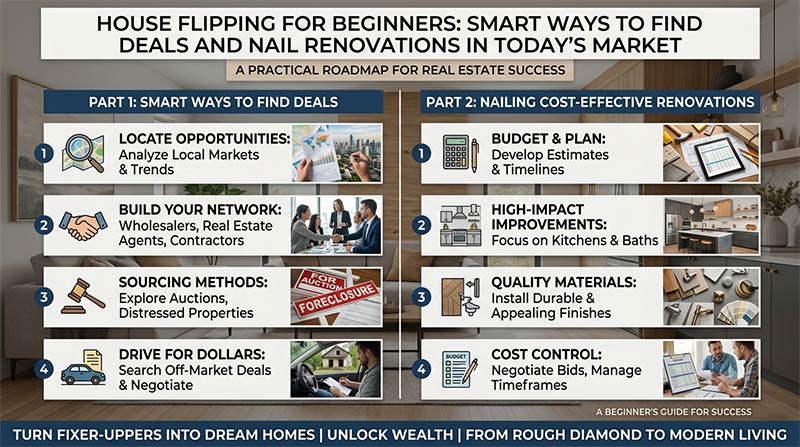
- Build a Network: Partner with a real estate agent who understands investor deals. They can flag off-market opportunities, pre-foreclosures, or motivated sellers. Wholesalers are another great source—they find distressed properties and assign contracts for a fee.
- MLS and Online Listings: Yes, you can still find flips on the Multiple Listing Service. Set up alerts for keywords like “fixer-upper,” “as-is,” or “needs TLC.” Be ready to act fast with a pre-approved financing option or cash.
- Auctions, Foreclosures, and Direct Mail: Check county auctions, REO properties from banks, and even driving for dollars (scouting neighborhoods for vacant or rundown homes). Direct mail campaigns to absentee owners or probates can uncover motivated sellers.
- Key Rule of Thumb: Use something like the 70% rule as a starting point—offer no more than 70% of the ARV minus repair costs. Many experienced flippers adjust to 75% or run full spreadsheets accounting for 6% commissions, holding costs (interest, taxes, insurance), and a 20% contingency on rehab.
Pro Tip from Experience: The best deals often aren’t the ugliest houses. They’re solid bones in good locations that need mostly cosmetic work. Buying the cheapest house on a great street usually beats the reverse.
Renovation Tips: Maximize ROI Without Overspending
Renovations eat budgets fast if you’re not careful. The goal isn’t a custom dream home—it’s a clean, updated property that appeals to the broadest pool of buyers.
Prioritize High-Impact, High-Return Areas
Focus spending where it shows and adds value:
- Kitchens and bathrooms (without going luxury)
- Fresh paint in neutral colors
- Flooring updates (LVP or hardwood-look)
- Curb appeal: landscaping, exterior paint, front door
- Lighting, fixtures, and minor electrical/plumbing refreshes
Avoid structural changes, pool additions, or highly personalized features unless the market demands them.
Cost-Cutting Strategies That Work
- Get multiple contractor bids and check references thoroughly.
- Buy materials in bulk or during sales; shop overstock at big-box stores.
- Do sweat equity on simpler tasks like painting or demo if you have the skills and time.
- Schedule work during slower seasons for better contractor rates.
- Use 3D planning tools early to visualize and catch issues.
Here’s a simple breakdown of typical renovation priorities for a mid-range flip:
| Area | Priority | Typical ROI Impact | Notes |
|---|---|---|---|
| Kitchen Updates | High | Excellent | Focus on cabinets, counters, appliances. Avoid full gut if possible. |
| Bathrooms | High | Strong | New vanities, tile, fixtures. |
| Flooring & Paint | High | Very Good | Quick, high visual impact. |
| Curb Appeal | Medium-High | Good | First impressions sell houses. |
| Major Structural | Low | Variable | Only if necessary; budget heavy contingency. |
| Luxury Finishes | Low | Poor for flips | Stick to durable, neutral mid-tier. |
Budgeting, Financing, and Timeline Realities
Always calculate your maximum allowable offer (MAO) backwards: ARV × 0.75 – rehab costs – holding/selling costs = MAO. Build in buffers. Financing options include hard money loans, private lenders, or cash if you have it—speed often wins deals.
Aim for a 3–6 month total timeline. Longer holding periods eat into profits through carrying costs.
Market Awareness and Risks
Location remains king. Research comps thoroughly using sites like Zillow, Redfin, or local MLS data. Check for upcoming developments that could boost values. In 2026, smaller Midwest and Northeast markets may offer better opportunities than saturated coastal areas.
Common pitfalls: Underestimating repairs, poor contractor management, ignoring permits, or over-improving for the neighborhood. Always get inspections and work with a solid team (agent, inspector, contractors, accountant).
House flipping isn’t a get-rich-quick scheme, especially now. It rewards preparation, patience, and a willingness to treat it like a business rather than a weekend project. I’ve seen too many enthusiastic beginners lose money by chasing shiny objects or skimping on due diligence. But those who put in the work—analyzing dozens of deals before pulling the trigger and staying disciplined on budgets—still find rewarding opportunities.
Start small, educate yourself continuously (books like The Book on Flipping Houses by J. Scott or BiggerPockets resources are excellent), and consider partnering with someone experienced on your first deal. The market will keep evolving, but the fundamentals of buying right and delivering a clean, appealing product never go out of style.
If you’re serious, begin by analyzing local comps this weekend and connecting with a few investor-friendly agents. The first deal is always the hardest—but it’s also the most educational. Good luck out there.

Disclaimer: This is for educational purposes only and not personalized financial advice. Past performance doesn’t guarantee future results. Always do your own research or seek professional guidance.