
I’ve always been fascinated by tools that quietly make life easier. You know those little browser tweaks that save you clicks, automate boring tasks, or give you superpowers on sites you use daily? That’s the magic of Chrome extensions. What started as side projects for many indie developers has turned into serious businesses—some pulling in thousands per month with minimal ongoing effort. In 2026, with Manifest V3 firmly in place and users craving productivity boosts, there’s still plenty of room for smart builders to profit.
This isn’t a get-rich-quick scheme. It takes real work, but the barriers are lower than building a full SaaS app. You control the distribution through the Chrome Web Store, and the best extensions solve nagging problems where users already spend their time. Here’s my take on building and marketing them for profit, drawn from what actually works today.
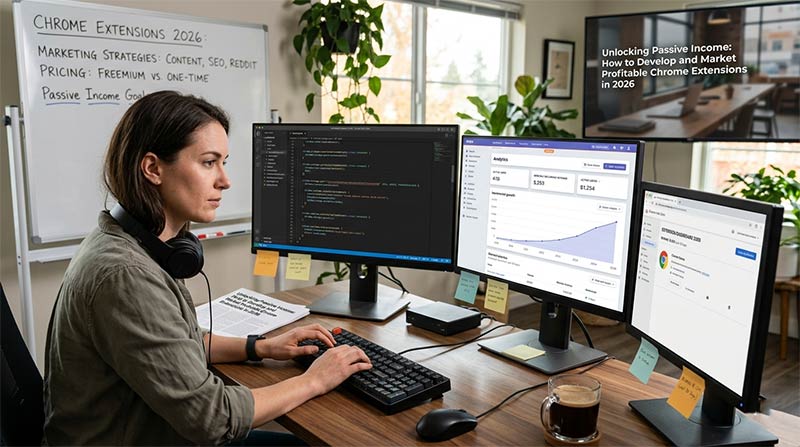
Why Chrome Extensions Remain a Smart Business Move
Browser extensions have low overhead: no servers to scale wildly at first, direct access to Chrome’s massive user base, and the ability for one person (or a small team) to handle everything. Successful ones like GMass or various productivity tools show it’s possible to hit meaningful revenue.
Real talk: Most extensions won’t make you a millionaire. Revenue is skewed—many earn pocket change, while the top ones with strong product-market fit and marketing can generate $2K–$10K+ monthly. The winners focus on niches with paying pain points: developers, e-commerce shoppers, marketers, or remote workers.
Key Advantages:
- Quick iteration: Update and push changes fast.
- Organic discovery via Chrome Web Store and Google Search.
- Multiple monetization paths beyond just ads.
Step 1: Ideation and Validation – Find Problems Worth Solving
Don’t build in a vacuum. Start by observing your own frustrations or browsing forums like Reddit, Indie Hackers, or Product Hunt for complaints. Great ideas often improve existing workflows: AI summarizers for long articles, price trackers for shoppers, or email productivity enhancers.
Validate early:
- Search the Chrome Web Store for competitors. Can you do it better, cheaper, or for a specific niche?
- Post on relevant subreddits or Twitter/X asking if people would pay for your idea.
- Build a simple landing page and drive a bit of traffic to gauge interest.
My perspective: The best extensions feel almost invisible—they remove friction without adding new tabs or complexity. Aim for “I wish this existed” moments.
Step 2: Development Basics with Manifest V3
Google requires Manifest V3 for new and updated extensions. It’s more secure and performant but shifts background scripts to service workers.
Core Files You’ll Need:
- manifest.json: Defines permissions, icons, and structure.
- Popup HTML/JS for the interface.
- Content scripts to interact with web pages.
- Service worker for background tasks.
Use modern tools: React or plain JS with Vite for faster builds. There are solid boilerplates available on GitHub to skip the setup headaches.
Keep permissions minimal—users hate overreaching requests. Test thoroughly across sites, and follow Chrome’s quality guidelines for performance and security.
If you’re not a full-time coder, AI tools like Cursor or Claude can accelerate prototyping significantly. Many successful solo devs lean on them heavily now.
Monetization Strategies That Work in 2026
The old Chrome Web Store payments are gone, so integrate third-party solutions.
| Model | Description | Best For | Examples/Notes |
|---|---|---|---|
| Freemium | Free core features; premium unlocks advanced ones | Most extensions | $4.99–$9.99/month via Stripe/Lemon Squeezy. High conversion potential with good value ladder. |
| One-Time Purchase | Pay once for lifetime access | Simple tools | License keys through services like Fungies. Good for dev tools. |
| Subscriptions | Recurring for ongoing value (e.g., AI features) | Productivity/AI extensions | Most sustainable MRR. |
| Affiliates/Sponsorships | Earn from referrals or paid promotions | Shopping/niche tools | Lower effort but variable. |
| Enterprise | Custom plans for teams | B2B tools | Higher price point, longer sales cycle. |
Focus on freemium for broad appeal. Aim for 2-5% conversion from free users. Track everything with analytics.
Marketing: From Zero to Thousands of Users
Publishing to the Chrome Web Store is just the start. Optimization and external promotion drive real growth.
Essential Tactics:
- Chrome Web Store Optimization (CWSO): Compelling title, description with keywords, high-quality screenshots, and video. Encourage reviews early.
- SEO Landing Page: Build a dedicated site ranking for terms like “[your niche] Chrome extension.” This funnels traffic from Google searches.
- Content & Communities: Write blog posts, share on Product Hunt, Reddit, and Indie Hackers. Guest post in “best extensions” roundups.
- Social Proof: Ask happy users for reviews. Featured badges boost visibility massively.
- Paid Ads: Once validated, test Google Ads or social targeting. But organic often wins long-term.
- Cross-Promotion: Partner with complementary extensions or tools.
One dev grew to 100K users by nailing SEO, requesting reviews strategically, and obsessing over a single great product. Consistency beats big launches.
Potential Pitfalls and My Honest Advice
Maintenance is real—browser updates or site changes can break things. Budget time for support. Privacy compliance is non-negotiable; poor reviews kill momentum.
From my viewpoint, the real profit comes from treating it like a product business, not a quick script. Solve one problem exceptionally well. Listen to users via feedback forms or in-extension surveys. The extensions that last solve problems their creators genuinely care about.
Many extensions sell for 5-figures or more once they have traction and revenue history.
Getting Started Today
- Set up your dev environment and build an MVP in a weekend.
- Publish to the Chrome Web Store .
- Create a simple landing page (Carrd or Framer works great).
- Share it where your audience hangs out.
- Iterate based on data.
Resources worth checking:
- Official Chrome Docs: https://developer.chrome.com/docs/extensions/
- Monetization tools: Stripe, Lemon Squeezy, Fungies.io
- Communities: r/chrome_extensions, Indie Hackers
Chrome extensions won’t replace a full-time job overnight, but they’re one of the most accessible ways to build something useful that pays you back. I’ve seen too many devs overthink the tech and underthink the marketing and user obsession. Nail the problem, ship fast, and promote relentlessly. The browser is still a goldmine for those willing to dig in.
What’s your extension idea? The next big one might be simpler than you think.
Disclaimer: This is for educational purposes only and not personalized financial advice. Past performance doesn’t guarantee future results. Always do your own research or seek professional guidance.