
Podcasting has exploded from a niche hobby into a legitimate career path for thousands of creators. Yet many talented hosts still struggle to turn their audience into reliable revenue. The good news? You don’t need millions of downloads to start earning. Smart podcasters combine sponsorships with listener support to build diversified, resilient income streams that grow with their show.
After following the space closely and talking with working podcasters, I’ve seen what actually works in today’s market — and what wastes time. Here’s a practical, up-to-date guide to monetizing your podcast effectively.
Why Podcast Monetization Matters More Than Ever
Listener attention is fragmented, ad rates fluctuate, and platform algorithms change constantly. Relying on a single revenue source is risky. The strongest shows treat monetization as an extension of their relationship with listeners — offering value first, then asking for support in return.
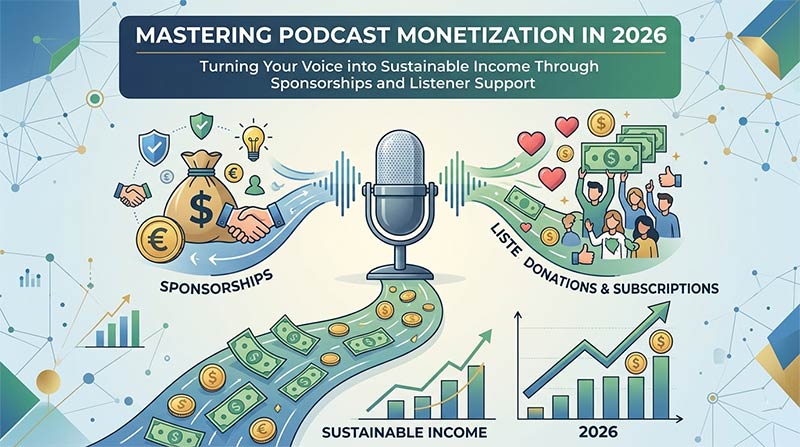
In 2026, successful podcasters typically earn from multiple channels. Sponsorships still dominate for mid-to-large shows, while listener support (subscriptions, donations, merch) provides stability for smaller or niche podcasts.
Sponsorships: The Power of Brand Partnerships
Sponsorships remain the biggest single paycheck for many podcasters. Brands love podcasts because listeners are engaged and attentive — often 30–60 minutes at a time.
How to land your first (and better) sponsors:
- Build a media kit — Include listener demographics, download numbers, engagement metrics, and past sponsorship results. Tools like Chartable (now part of Spotify for Podcasters) or Podtrac help with credible stats.
- Target the right brands — Look for companies whose values align with your audience. A true-crime show might partner with security apps; a business podcast with productivity tools.
- Start small — Many hosts begin with affiliate marketing (Amazon Associates, Commission Junction) or direct outreach to local businesses before approaching big advertisers.
- Use platforms that connect you —
- PodcastAds.com
- Megaphone
- Acast
- Direct sales through your own site
Pro tip from experience watching shows grow: Authenticity sells. Read ads in your own voice with genuine endorsement. Listeners can smell scripted corporate copy from a mile away, and nothing kills trust faster.
Typical rates in 2026 range from $15–$50 CPM (cost per mille) for mid-tier shows, with premium niches commanding more. A show with 10,000 downloads per episode can realistically earn $150–$500 per sponsored segment.
Listener Support: Building a Direct Relationship
While sponsorships pay the bills, listener support creates sustainability and creative freedom. Fans who pay become your most loyal advocates.
Proven listener support models:
- Paid subscriptions (Apple Podcasts Subscriptions, Patreon, Supercast, Spotify)
- One-time donations via Buy Me a Coffee, Ko-fi, or PayPal
- Membership communities (Discord, Substack, private Facebook groups)
- Merch and live events
Listener support works especially well for niche or highly personal shows where fans feel a deep connection. A gardening podcast I follow recently crossed $8k/month on Patreon by offering bonus episodes, plant Q&As, and early access.
Comparison of Monetization Approaches
| Method | Best For | Startup Difficulty | Revenue Stability | Audience Size Needed | Creative Control |
|---|---|---|---|---|---|
| Brand Sponsorships | Mid-large shows | Medium | High (contract-based) | 5k+ downloads/ep | Medium |
| Listener Subscriptions | Niche & loyal audiences | Low | Very High | Any size | High |
| Affiliate Marketing | All sizes | Low | Medium | Any | High |
| Merch & Live Events | Established personal brands | Medium-High | Medium | 10k+ fans | High |
| Donations | Early stage | Very Low | Low-Medium | Any | High |
This table shows why combining approaches beats chasing one “perfect” method.
The Human Side of Podcast Money
Here’s what many guides miss: monetization changes your relationship with your show. When you start treating it like a business, the joy can fade if you’re not careful.
I’ve noticed the best creators set clear boundaries. They disclose sponsorships transparently, never push products they don’t believe in, and keep a portion of episodes completely sponsor-free. This respect for the audience builds long-term trust that actually leads to higher conversion rates over time.
Another observation: the podcasters making the most sustainable money obsess over retention and community more than raw download numbers. A show with 8,000 highly engaged listeners will outperform one with 50,000 casual ones when it comes to listener support.
Getting Started: Actionable Steps
- Audit your current show — Are you delivering consistent value? Strong production quality?
- Choose 1-2 methods to test first. Most new podcasters do best starting with affiliate links and a simple Patreon.
- Be patient — Many successful shows took 18–36 months to reach meaningful income.
- Track everything — Use a simple spreadsheet or tools like Airtable to monitor revenue sources.
Resources worth checking:
Podcast monetization isn’t about “hacking” the system or tricking listeners into paying. It’s about creating something so valuable that people want to support it — whether through their attention to sponsors or direct contributions.
Focus on building a show you’d listen to even if you weren’t making money. The revenue follows naturally from there. Some of the most financially successful podcasters I’ve seen are the ones who started with zero business plan — they just refused to quit and kept improving.
If you’re serious about turning your podcast into income, start today with one small step: update your show notes with a support link or reach out to one potential sponsor. Momentum builds faster than you expect.
What’s your biggest monetization challenge right now? Drop it in the comments — happy to share more specific tactics for your niche.

Disclaimer: This is for educational purposes only and not personalized financial advice. Past performance doesn’t guarantee future results. Always do your own research or seek professional guidance.