
Starting out with financial advising can feel overwhelming. Between market volatility, complex products, and endless apps promising quick wins, it’s easy to get lost or make costly mistakes. I’ve spent years observing how everyday people build (or lose) wealth, and one truth stands out: good financial advising isn’t about chasing hot stocks—it’s about clarity, discipline, and trust. Whether you’re in your 20s paying off student loans or in your 40s finally getting serious about retirement, understanding the basics of tools and ethics gives you a real edge.
Why Financial Advising Matters Early On
Financial advising isn’t just for the wealthy. It’s about creating a roadmap that aligns your money with your life goals—buying a home, funding education, or retiring comfortably. Beginners often underestimate compounding or overestimate their risk tolerance. A solid advisor (or self-directed plan) helps you avoid emotional decisions during downturns and build habits that last.
From my perspective, the biggest shift happens when you stop treating money as a mystery and start seeing it as a tool for freedom. Too many people delay because it feels intimidating, but small, consistent steps compound faster than most realize.
Essential Tools for Beginners
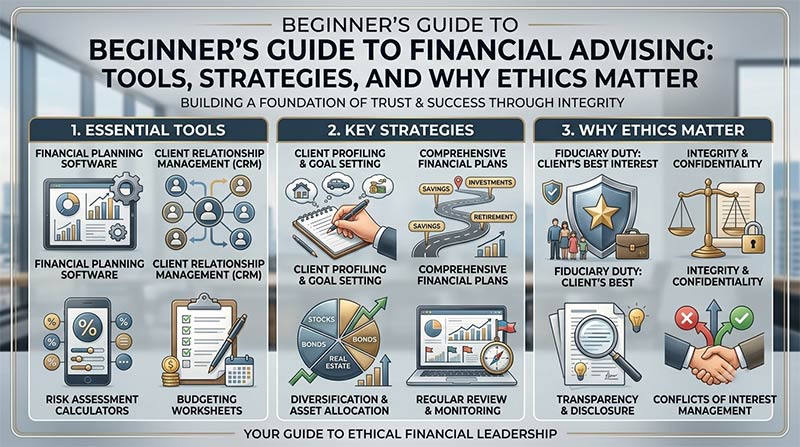
You don’t need fancy software to start. Free or low-cost resources can handle most needs. Here’s what I recommend focusing on first:
- Budgeting Apps: Track spending and assign every dollar a job. Popular options include You Need A Budget (YNAB), which teaches zero-based budgeting, and Monarch Money for comprehensive tracking.
- Retirement and Savings Calculators: Free tools from Investor.gov help model compound growth, required minimum distributions, and savings goals.
- Investment Platforms: Robo-advisors like Betterment or Wealthfront offer automated, low-fee portfolios ideal for beginners. For more hands-on, Fidelity or Vanguard provide excellent educational resources alongside low-cost index funds.
- Credit and Debt Tools: Credit Karma for monitoring scores, and apps like Rocket Money to hunt down subscriptions.
Popular Financial Tools Comparison
| Tool/App | Best For | Cost | Key Features | Link/Example |
|---|---|---|---|---|
| YNAB | Detailed budgeting | ~$15/month or $99/year | Zero-based budgeting, tutorials | ynab.com |
| Monarch Money | Couples & net worth | ~$14.99/month | Shared access, goal tracking | monarchmoney.com |
| Investor.gov Calculators | Planning & projections | Free | RMD, compound interest, savings | investor.gov |
| Credit Karma | Credit monitoring | Free | Score tracking, loan offers | creditkarma.com |
| Vanguard / Fidelity | Long-term investing | Low fees | Index funds, robo options | vanguard.com or fidelity.com |
These tools lower the barrier. Start simple—track expenses for a month—and layer on complexity as you go. In my experience, the apps that force behavioral change (like YNAB) deliver the most lasting results over flashy dashboards.
How to Choose a Financial Advisor
Not everyone needs a personal advisor right away, but as assets grow, professional help can pay for itself. Look for:
- Credentials: Certified Financial Planner (CFP®) professionals stand out for their rigorous training and ethics standards.
- Fee Structure: Fee-only advisors (who charge flat fees or a percentage of assets) often avoid conflicts better than commission-based ones.
- Fit: Interview at least 2-3. Ask about their experience with clients like you, investment philosophy, and how they handle market drops.
Directories like the CFP Board’s letsmakeaplan.org or NAPFA.org for fee-only advisors make searching easier. Check backgrounds via BrokerCheck (FINRA) and read reviews, but trust your gut on communication style.
The Critical Role of Ethics in Financial Advising
This is where many beginners get burned. Ethics aren’t optional—they’re the foundation of trust. The gold standard is fiduciary duty: advisors must put your interests first, always. This includes a duty of care (competent advice), loyalty (no self-dealing), and transparency.
Watch for red flags: advisors pushing high-commission products that don’t fit your needs, vague fee disclosures, or pressure to act fast. True fiduciaries (like many CFP® professionals and RIAs) operate under strict standards from the CFP Board and SEC.
I’ve seen too many cases where hidden conflicts eroded client wealth over time. My take? Prioritize ethics even if it costs a bit more upfront. A trustworthy advisor saves you far more through avoided mistakes and better long-term planning than any “deal” ever could. Education empowers you to spot the difference—read the advisor’s Form ADV, ask directly if they are a fiduciary at all times, and walk away if answers feel evasive.
Building Your Own Perspective and Staying Grounded
Financial advising isn’t one-size-fits-all. Some thrive with robo-advisors and DIY apps; others need human guidance for complex situations like taxes or estate planning. The key is continuous learning. Resources like Investopedia, Khan Academy, or Bank of America’s Better Money Habits provide solid, unbiased education.
From my viewpoint, the most successful beginners combine tools with mindset: patience over speculation, diversification as defense, and regular reviews. Markets will fluctuate—ethics and good processes endure. Avoid get-rich-quick noise on social media; focus on what you can control.
Financial advising for beginners boils down to starting with awareness, leveraging accessible tools, and insisting on ethical guidance. Build that emergency fund, automate savings, educate yourself relentlessly, and seek help when needed. Your future self will thank you.
Take one action today—download a budgeting app or review your credit report. Progress compounds just like interest. For personalized next steps, consider resources from trusted sites like investor.gov or consult a fiduciary advisor. Your financial journey is yours to shape—make it intentional.

Disclaimer: This is for educational purposes only and not personalized financial advice. Past performance doesn’t guarantee future results. Always do your own research or seek professional guidance.