
The smart home market keeps expanding at a steady clip. By 2026, more households are connecting lights, thermostats, cameras, locks, and voice assistants than ever before. People want convenience, energy savings, and a bit of future-tech feel in their daily routines. That demand creates a real opening for affiliate marketers who can cut through the noise with clear, practical advice.
I started recommending smart home devices years ago after wiring up my own place and documenting the process. What began as simple notes turned into detailed setup guides that readers actually used. Those guides drove consistent affiliate commissions because they solved real problems instead of just listing product specs. The value of a well-written installation tutorial or buying comparison often outweighs a glossy review—people stay longer, trust the source more, and click the links when they’re ready to buy.
In this article I’ll walk through why smart home devices remain a strong affiliate niche in 2026, how to find reliable programs, which content types convert best, and the practical steps for writing setup guides that earn. You’ll also get SEO tactics that still work, trust-building methods, tracking tips, and a realistic look at earnings and common pitfalls. Whether you’re just testing the waters or refining an existing site, the goal is the same: create helpful content that readers appreciate and that generates commissions without hype.
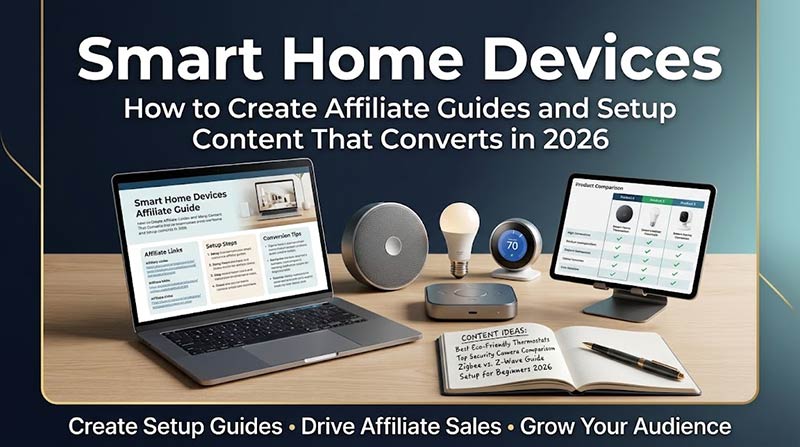
Why Smart Home Devices Are a Strong Affiliate Niche in 2026
Smart home gear sits at the intersection of everyday utility and ongoing upgrades. Once someone installs a smart thermostat or a few lights, they often expand the system—adding cameras, sensors, or multi-room audio. That creates repeat purchase opportunities and longer customer journeys.
Several factors keep the niche attractive:
- High average order values. A solid starter kit or a premium lock can run $100–$400. Larger ecosystem buys push higher.
- Recurring interest. Software updates, new integrations, and seasonal needs (outdoor cameras before winter, energy monitors during peak bills) keep people searching.
- Problem-solving content wins. Shoppers search for “how to set up smart lock with Alexa” or “best smart plugs for energy monitoring” far more than vague product names. Guides that answer those queries rank and convert.
- Ecosystem loyalty. Brands like those in the Matter standard, major voice platforms, and established security lines encourage multi-device purchases. Your content can guide people through compatible choices.
In my experience, the niche rewards patience. Early traffic may be modest, but evergreen setup posts continue earning months or years later as new models release and older ones get discounted. Competition exists, yet quality practical writing still stands out because many sites only publish surface-level roundups.
Finding the Best Smart Home Affiliate Programs
Not every program is worth promoting. Look for solid commission rates, reliable cookie windows, product availability, and brand reputation that matches the helpful tone of your content.
Popular options include major retailer programs and specialized networks. Amazon Associates remains the easiest entry point for many smart home products because of its vast catalog and customer trust. Other networks such as ShareASale, Impact, and CJ Affiliate host brand-specific programs for lighting, security, and energy devices. Some manufacturers run direct affiliate programs with higher rates for dedicated promoters.
When evaluating programs, check:
- Commission structure (percentage or flat)
- Cookie duration
- Payment threshold and reliability
- Whether the brand supports educational content or only pure sales pages
- Product return rates and customer satisfaction signals
I usually start with broad retailer programs for volume and then layer in higher-paying brand deals once traffic is established. Always read the terms carefully—some restrict certain promotional methods or require specific disclosure language.
For deeper dives into choosing networks, see my overview of affiliate marketing programs worth testing.
Creating High-Converting Content Types
Different formats serve different stages of the buyer journey. Here’s what consistently performs for me:
Buying guides help undecided readers compare options by use case (apartment renters, whole-home setups, budget builds, accessibility needs). Structure them around real scenarios rather than endless feature lists.
Setup and installation tutorials are the quiet converters. A detailed post on connecting a specific camera to a hub or calibrating a thermostat often ranks for long-tail searches and keeps readers engaged while they follow steps. These posts naturally include product links at the right moments.
Comparison posts pit two or three popular models against each other on criteria that matter: ease of install, app reliability, ecosystem compatibility, long-term support. Readers who reach this stage are closer to purchasing.
Troubleshooting and maintenance content builds authority. Posts on fixing common connectivity issues or updating firmware keep people coming back and position you as a reliable source.
Mix these formats. A buying guide can link to deeper setup tutorials. A comparison can include short installation notes. The key is matching the content to search intent.
How to Write Effective Product Setup and Installation Guides
This is where many affiliates leave money on the table. Generic “unbox and connect” posts rarely convert as well as thorough, realistic walkthroughs.
Start with the reader’s actual starting point. Assume they have the device in hand, a compatible hub or app account, and average technical confidence. Then cover:
- What you’ll need before beginning (tools, accounts, network requirements)
- Unboxing and physical installation notes, including common placement mistakes
- App pairing and account creation steps
- Integration with popular voice assistants or hubs
- Testing and basic configuration
- Common issues and quick fixes
- Optional advanced tips
Use clear numbered steps, short paragraphs, and screenshots or simple diagrams where helpful. Mention any quirks you encountered in your own installs—those details build credibility. Place affiliate links next to the product name the first time it appears and again near the end when readers are ready to buy missing accessories or a recommended alternative.
I always include a short “time required” estimate and a note on difficulty level. Readers appreciate knowing whether a job takes 15 minutes or an afternoon.
For a ready template, the table below outlines a practical structure I reuse and adapt.
| Section | Purpose | Key Elements to Include | Typical Length |
|---|---|---|---|
| Introduction | Set expectations and tools needed | Difficulty, time, compatibility notes | 100–150 words |
| Physical Installation | Guide mounting or placement | Safety tips, common errors, photos if possible | 200–300 words |
| App Setup & Pairing | Walk through software connection | Screenshots of critical screens, account tips | 250–400 words |
| Ecosystem Integration | Connect to Alexa, Google, HomeKit, Matter | Step-by-step, troubleshooting links | 150–250 words |
| Testing & Configuration | Confirm everything works | Recommended settings, personal preferences | 100–150 words |
| Common Problems | Prevent support headaches | 4–6 frequent issues with solutions | 150–200 words |
| Next Steps & Links | Drive the purchase decision | Accessories, upgrades, related guides | 100 words |
This structure keeps posts scannable and complete. Readers finish feeling capable rather than frustrated.
SEO and Content Strategies That Drive Traffic
In 2026, search still rewards pages that thoroughly satisfy intent. Focus on:
- Long-tail keywords. Target phrases like “how to set up [device] with Matter” or “best smart home starter kit for apartments 2026.” These convert better than broad terms.
- Helpful depth. Cover the full process, related questions, and realistic outcomes. Google’s systems favor content that reduces the need for additional searches.
- Updated information. Note firmware changes, new standards (Matter continues to mature), and discontinued models. Add “Last updated” dates.
- Internal linking. Connect buying guides to setup tutorials and troubleshooting posts. This keeps readers on your site longer and distributes authority.
- Technical basics. Fast load times, mobile-friendly layout, clear headings, and descriptive image alt text still matter.
I also monitor emerging searches around energy monitoring, local control options, and privacy-focused devices. Those topics attract engaged readers who are often willing to invest in quality gear.
For more on ranking tech content, check my notes on tech review SEO strategies.
External resources worth referencing include the official Matter documentation for compatibility details and major retailer affiliate program pages for current terms.
Building Trust and Handling Disclosures
Readers can smell forced recommendations. The fastest way to lose trust is to push products you haven’t used or that don’t fit the scenario you describe.
My approach is straightforward:
- Only promote devices I’ve tested or thoroughly researched through reliable sources.
- Explain both strengths and limitations honestly.
- Disclose affiliate relationships clearly near the top of every post and again near links. A simple statement such as “This post contains affiliate links. If you purchase through them, I may earn a commission at no extra cost to you” is usually enough when placed prominently.
- Avoid exaggerated claims. “This lock made my evenings easier” beats “This will revolutionize your security forever.”
Transparency compounds. Over time, readers return because they know the advice is grounded. That repeat traffic and lower bounce rates support both rankings and conversions.
Tracking Performance and Optimizing Earnings
Guessing which posts earn is a waste of time. Use the tracking tools provided by each affiliate network plus your analytics platform.
Key metrics I watch:
- Clicks per post and conversion rate by content type
- Revenue by product category and by individual guide
- Time on page and scroll depth for setup tutorials
- Search queries that bring traffic (to refine existing posts)
Once you have data, double down on winners. Expand a high-converting setup guide with accessory recommendations or seasonal updates. Improve underperformers by adding clearer steps, better images, or stronger internal links. Occasionally retire posts for discontinued products rather than letting them dilute site quality.
Realistic earnings vary widely. A new site might earn little for the first several months while content builds authority. Established sites with solid traffic can generate steady four-figure monthly commissions from smart home content alone, especially when multiple programs and content types are active. Results depend on traffic volume, niche focus, and conversion rates—treat any specific number claims with caution.
Common Mistakes and Realistic Expectations
I’ve made most of these myself at some point:
- Publishing thin reviews without real testing
- Ignoring setup content in favor of endless listicles
- Neglecting disclosures or burying them
- Chasing every new gadget instead of focusing on proven categories
- Expecting overnight traffic and commissions
The biggest realistic expectation is that results take consistent work. Publishing one excellent guide per week or every two weeks, updating older posts, and monitoring performance will outperform sporadic bursts of low-effort content. The smart home space rewards people who treat readers as neighbors rather than clicks.
Another common trap is over-promoting expensive ecosystems when many readers start small. Content that helps someone begin with two or three reliable devices and expand later tends to convert more reliably than pushing full-home packages from day one.
Creating profitable smart home affiliate guides in 2026 comes down to solving real problems for readers. Focus on thorough buying comparisons, detailed setup tutorials, honest troubleshooting, and clear disclosures. Choose programs carefully, track what actually earns, and keep improving the content that works.
Helpfulness and honesty are the long-term advantages. When your guides make someone’s installation smoother or their purchase decision clearer, the commissions follow more naturally.
If you’re ready to expand beyond smart home content or refine your overall approach, explore more practical strategies in my collection of affiliate marketing and tech income guides. Start with one solid setup tutorial this week and build from there—the results compound.

Disclaimer: This is for educational purposes only and not personalized financial advice. Past performance doesn’t guarantee future results. Always do your own research or seek professional guidance.