
The world of NFTs has matured since the explosive hype of the early 2020s. What started as a niche experiment in digital ownership has become a legitimate avenue for artists, collectors, and creators to monetize their work directly. As someone who’s watched blockchain evolve, I believe crypto art still offers one of the most exciting frontiers for independent creatives—especially now that fees are lower, tools are more user-friendly, and the focus has shifted back to genuine artistry rather than quick flips.
If you’re a digital artist, photographer, musician, or just someone with a creative spark and curiosity about Web3, this guide walks you through everything you need to get started with creating and selling NFTs in 2026.
What Are NFTs and Why Do They Matter for Artists?
NFTs, or Non-Fungible Tokens, are unique digital certificates of ownership stored on a blockchain. Unlike cryptocurrencies like Bitcoin, each NFT is one-of-a-kind and can’t be swapped on a 1:1 basis.
For crypto art, this means your digital painting, animation, 3D model, or even a tweet can be tokenized. The buyer gets provable ownership, and you can earn royalties on future resales—often 5-10% automatically enforced by smart contracts.
In my view, the real power isn’t just the money (though that’s nice); it’s the shift in how art is valued and distributed. Traditional galleries gatekeep. NFTs let you build a direct relationship with fans worldwide. That said, success still requires quality work and community building—technology alone won’t make mediocre art valuable.
Getting Started: Essential Tools and Setup
Before minting your first piece:
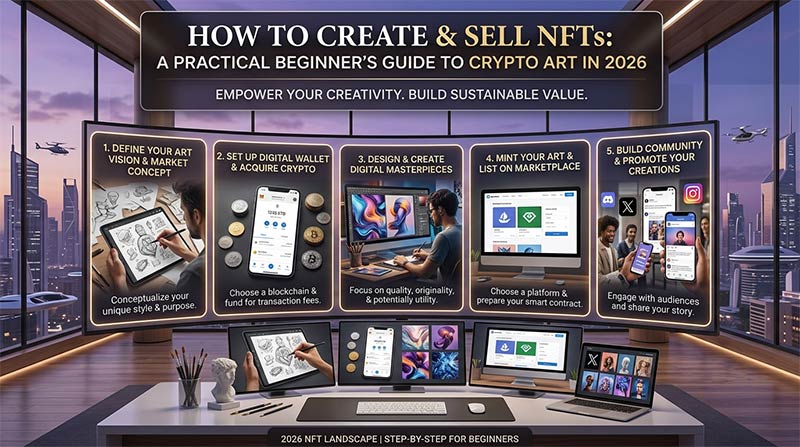
- Create Your Art — Use familiar tools like Photoshop, Procreate, Blender, or free alternatives like GIMP and Krita. Focus on originality. AI-generated art is common but often needs heavy personal editing to stand out.
- Choose a Blockchain — Ethereum remains popular for visibility but can have higher fees. Solana and Base offer lower costs and faster transactions—great for beginners. Tezos is eco-friendly and artist-favored.
- Set Up a Crypto Wallet — MetaMask is the most beginner-friendly for Ethereum-compatible chains. Phantom works well for Solana. Never share your seed phrase.
- Buy Some Crypto — You’ll need a small amount of the blockchain’s native token (ETH, SOL, etc.) for gas fees and possibly a listing fee.
Step-by-Step: How to Create Your First NFT
Here’s a straightforward process that works on most platforms:
- Prepare Your File: High-resolution (at least 3000×3000 pixels for images), with metadata like title, description, and attributes.
- Connect to a Marketplace: Sign up and connect your wallet.
- Upload and Mint: Upload your file, add details, and mint (permanently record it on the blockchain). Many platforms now support “lazy minting,” where the NFT is minted only when sold—saving you upfront fees.
- List for Sale: Set a price (fixed or auction) and add royalties.
The whole process can take under an hour once you’re set up.
Choosing the Right NFT Marketplace
Different platforms suit different needs. Here’s a quick comparison:
| Marketplace | Best For | Chains Supported | Fees (approx.) | Beginner-Friendly? |
|---|---|---|---|---|
| OpenSea | All-rounder, discovery | Ethereum, Solana, Base, Polygon | ~0.5% seller fee | Yes (top choice) |
| Blur | Active traders | Ethereum | Low/zero | Moderate |
| Magic Eden | Gaming, Solana ecosystem | Solana, others | Low | Yes |
| Rarible | Community-driven | Multiple | Variable | Yes |
| Foundation | Curated high-end art | Ethereum | Higher | Moderate |
OpenSea is still the go-to recommendation for most newcomers thanks to its intuitive interface and massive audience.
How to Sell Your NFTs Successfully
Creating is only half the battle—selling requires strategy:
- Build a Community First: Share your process on X (Twitter), Instagram, Discord, or TikTok. Engage genuinely before promoting sales.
- Pricing Strategy: Start modest to build momentum. Research similar works. Consider editions (multiple copies) for accessibility.
- Marketing: Use eye-catching visuals, tell the story behind your piece, and collaborate with other artists. Participate in drops or themed events.
- Royalties Matter: Always enable them. They provide ongoing income as your work appreciates.
From my perspective, the artists who thrive treat NFTs like a long-term career move rather than a get-rich-quick scheme. Consistency and authenticity win over time.
Common Pitfalls to Avoid
- High gas fees on the wrong chain.
- Copying others’ styles without originality (plagiarism risks are real).
- Ignoring security—use hardware wallets for larger holdings.
- Overlooking taxes; consult a professional as NFT sales are taxable events in most places.
The market can be volatile, so only invest what you can afford to lose, especially as a beginner.
The Future of Crypto Art
In 2026, NFTs feel less like a speculative bubble and more like infrastructure for digital creators. Tools have improved, environmental concerns have eased with better blockchains, and utility (access, experiences, community) is increasingly important alongside pure art.
I’ve always appreciated how this space rewards curiosity and experimentation. Whether you make $10 or $10,000 on your first sale, the real value is learning to own your digital presence and connect directly with people who love what you create.
Ready to begin? Grab your favorite art tool, set up that wallet, and mint something meaningful. The blockchain is waiting—and your first collector might be just a few posts away.
Useful Resources:
- OpenSea
- MetaMask Wallet
- Crypto Art Community on X (search #NFTCommunity)
- Guides on low-fee chains like Base or Solana
Start small, stay creative, and enjoy the journey. The best crypto art is still being made by people just like you.
Disclaimer: This is for educational purposes only and not personalized financial advice. Past performance doesn’t guarantee future results. Always do your own research or seek professional guidance.