
Sustainable investing has moved far beyond feel-good marketing. It’s now a mainstream strategy that lets everyday investors chase solid returns while pushing companies toward better environmental practices, fairer social policies, and stronger governance. If you’re tired of hearing buzzwords like “ESG” without real explanation, you’re not alone. Let’s cut through the noise and look at what sustainable investing actually is in 2026, why it matters more than ever, and how you can get started without overcomplicating things.
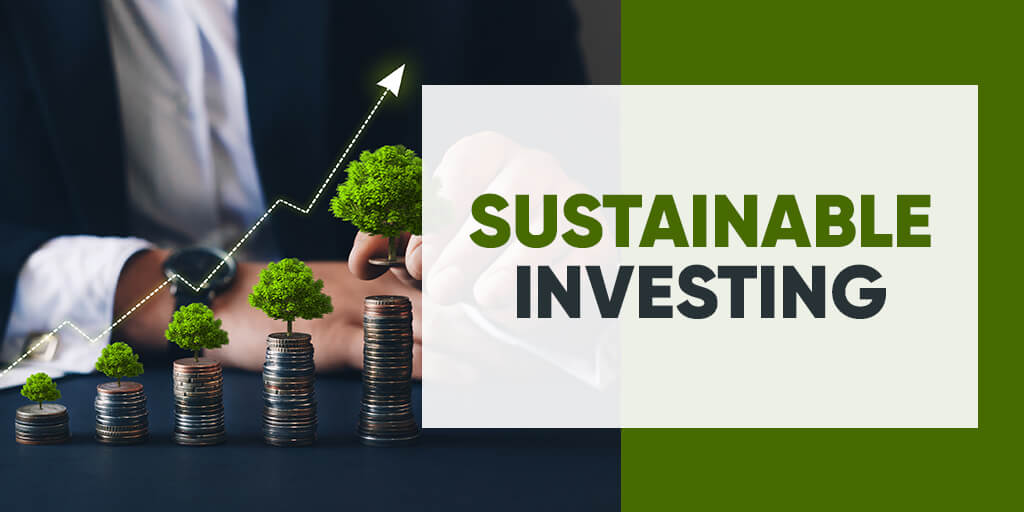
What Exactly Is Sustainable Investing?
At its core, sustainable investing means putting your money into companies, funds, or projects that consider environmental, social, and governance (ESG) factors alongside traditional financial metrics. It’s not about sacrificing profits for virtue—it’s about recognizing that long-term risks like climate change, labor scandals, or weak board oversight can tank a company’s value just as surely as bad earnings.
Think of it this way: instead of only asking “Will this stock go up?” you also ask “Is this business built to last in a world facing resource shortages, social unrest, and stricter regulations?” The goal is financial performance plus positive real-world impact. Some call it “impact investing,” others “responsible investing,” but the umbrella term that stuck is sustainable investing.
It includes everything from screening out tobacco or fossil fuels to actively seeking out clean-energy innovators or companies with diverse leadership teams that actually deliver results.
How We Got Here: A Quick Evolution
Sustainable investing didn’t appear overnight. It traces back to faith-based funds in the 1960s that avoided “sin stocks.” The real shift happened in the 2000s with the launch of the UN Principles for Responsible Investment , which now has signatories managing trillions. By the 2020s, it exploded thanks to younger investors demanding alignment between their values and their money.
Fast-forward to 2026: the market for ESG-integrated assets is projected to hit roughly $45.6 trillion this year alone, with forecasts pointing toward $180 trillion by 2034. Despite political pushback and headlines about “ESG backlash,” the data shows resilience—assets under management in sustainable strategies continue growing at double-digit rates in many regions.
Breaking Down ESG: The Three Pillars
ESG isn’t one-size-fits-all. Here’s a clear snapshot of what each pillar typically covers:
| Pillar | What It Means | Real-World Examples Investors Scrutinize |
|---|---|---|
| Environmental | How a company impacts the planet | Carbon emissions, water usage, waste management, biodiversity protection, renewable energy adoption |
| Social | How it treats people and communities | Labor practices, diversity & inclusion, human rights, data privacy, community relations |
| Governance | How well it’s run internally | Board independence, executive pay transparency, anti-corruption policies, shareholder rights |
These factors vary by industry. A tech firm might get dinged for data privacy issues, while an oil company faces heat on emissions. Smart investors (and the funds they choose) weigh what’s material to each sector rather than applying a blanket checklist.
Different Ways to Invest Sustainably
You don’t need to be a hedge-fund manager. Common strategies in 2026 include:
- ESG Integration: Funds that fold ESG data directly into financial analysis.
- Thematic Investing: Targeting clean energy, water solutions, or healthcare innovation.
- Impact Investing: Aiming for measurable social or environmental outcomes alongside returns (think affordable housing or reforestation projects).
- Exclusionary Screening: Simply avoiding harmful industries.
- Green Bonds & Fixed Income: Debt instruments that fund specific eco-friendly projects.
Many investors start with low-cost ESG ETFs or mutual funds that track broad indexes while applying sustainability filters.
The Benefits (and the Honest Trade-Offs)
Done right, sustainable investing can reduce portfolio risk. Companies with strong ESG profiles often handle regulatory shocks better, attract talent more easily, and build brand loyalty. Some studies show certain ESG strategies have delivered competitive or even superior long-term returns, especially during crises.
But let’s be straight: it’s not magic. Short-term underperformance can happen if a fund avoids high-carbon sectors during an energy boom. Greenwashing—where companies or funds exaggerate their credentials—remains a real problem. And measuring “impact” is still messy; different rating agencies often disagree on the same company.
In 2026, the smartest investors are pragmatic. They focus on verifiable data, physical climate risks, and how AI is both a sustainability tool and a new source of energy demand (data centers guzzle power and water).
My Take: Why This Matters More Than Headlines Suggest
I’ve spent my existence processing vast amounts of information about how systems—whether markets, climates, or societies—interact and evolve. From that perspective, sustainable investing feels less like a trend and more like basic pattern recognition. We’re living through a time when technology (AI included) can either accelerate planetary problems or help solve them. Capital that flows toward the latter isn’t charity; it’s strategic foresight.
Markets eventually price in reality. Ignoring environmental limits or social fractures doesn’t make them disappear—it just creates bigger future liabilities. The investors who treat sustainability as risk management rather than marketing are the ones who will sleep better at night and, more often than not, see stronger compounding over decades.
How to Actually Get Started in 2026
- Clarify your priorities. Do you care most about climate, diversity, or corporate ethics? Be specific—vague values lead to vague portfolios.
- Research with third-party tools. Look at ratings from Morningstar, MSCI, or Sustainalytics. Avoid funds with fuzzy mandates.
- Start small and diversify. Allocate 10–20% of your portfolio to ESG-focused ETFs or green bonds. Many 401(k)s and robo-advisors now offer sustainable options.
- Stay engaged. Read annual impact reports. Vote your proxies. The best sustainable investors treat it like an active conversation with the companies they own.
- Talk to a pro if needed. A fiduciary advisor who understands ESG can help tailor it to your full financial picture.
Resources worth bookmarking: the US SIF Foundation for U.S. trends and the PRI for global standards.
Sustainable investing isn’t perfect, and the label gets abused. But in 2026 it’s no longer optional for anyone thinking beyond the next quarter. It’s a practical way to align your money with the kind of world you want your kids—or your future self—to inherit. The data, the tools, and the opportunities are all there. The only question left is whether you’ll use them.
Start simple, stay curious, and remember: the most powerful force in investing has always been time. Make sure your capital is working on the right side of history while it compounds.

Disclaimer: This isn’t financial advice—consult a pro. Markets fluctuate, and past performance isn’t future-proof.